


Journal
How Ancient Greek Literature Survived Against All Odds

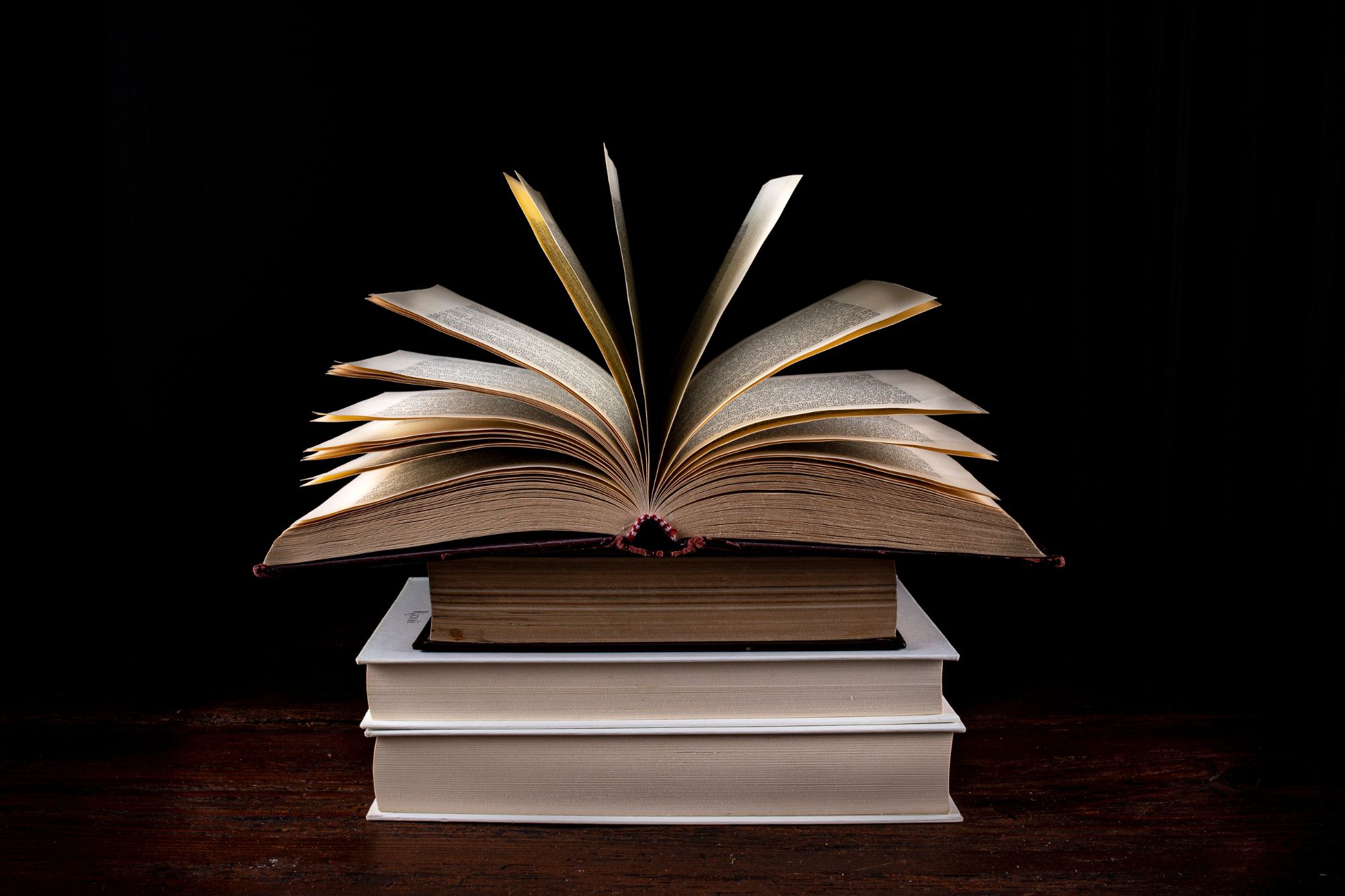
An adventure in transmission: from sung epics to papyrus rolls, from Byzantine scriptoria to Renaissance presses, from desert rubbish heaps to modern editions.
Ancient Greek literature has reached us through a long sequence of fragile handoffs. Through time, materials deteriorated, libraries burned, political systems collapsed, and languages shifted. At every stage, texts depended on human intervention: on readers who valued them, institutions that maintained them, and scholars who found reasons to carry them forward.
The survival of Greek literature was never a single, continuous story. It unfolded across multiple environments and historical moments, each with its own conditions of preservation. It is the story of a poem sung at a festival, a papyrus roll in a scholar’s hands, a codex in a monastic library, a printed volume fresh from a Venetian press, a carbonized scroll whose ink is coaxed back into visibility by modern imaging, and the freshly printed first volume of an 819-book collection in the hands of a daring publisher in Athens.
To read Ancient Greek texts now is to encounter not only antiquity, but also the long history of their transmission.
From Oral Tradition to Recording Homer
Greek literature begins as performance: epic verses and heroic memory lived in the mouth and ear before they lived on the page. Meter was not decoration; it was a mnemonic engine, shaping language into a form that could be retained, recomposed, and recognized across generations. For centuries, oral tradition preserved poetry, stories, and genealogy.
There came a moment when Greek culture began to look backward, treating its own past as something that needed to be recorded and safeguarded.
The Homeric epics represent the most consequential transition from oral circulation to written stabilization. Ancient tradition famously links this to Peisistratos and Athens: a ruler associated with ordering the poems for public recitation and, in later accounts, with collecting or “editing” them into a more stable form. Although the details remain debated, Peisistratos’s effort is a turning point and marks a truth that remains unchanged: turning a large oral repertoire into a reference text requires an institutional project, a champion, and, crucially, people paid to do the work.
The result was not simply “Homer written down,” but Homer standardized enough to be copied. That standardization is one reason the Iliad and the Odyssey became the spine of Greek education for centuries thereafter.
Copyists, Cataloguers, and the Hellenistic Libraries
Once texts became written artifacts, they entered a world of material constraints. Papyrus is light, portable, and wonderfully practical—until humidity, insects, handling, or time take their toll. The central mechanism of survival therefore became copying. A text lasted only as long as it continued to be recopied.
Private libraries played a crucial role in preserving Greek literature, particularly within philosophical communities. Aristotle is the most notable example. Ancient sources report that he assembled a substantial working library for research and teaching at the Lyceum. After his death, the collection passed through several private hands, including that of Neleus of Scepsis, whose heirs reportedly concealed the books to protect them from confiscation. Though the manuscripts suffered damage during this period, their eventual recovery and editing in the first century BCE proved decisive for the survival of much of Aristotle’s corpus. Similar patterns appear elsewhere: Epicurus maintained a library within the Garden to preserve his writings, while Plato relied on written texts circulating within the Academy.
Such personal and school-based libraries, vulnerable yet continuous, often preserved works by keeping them embedded in active intellectual communities.
The Hellenistic period created the first large-scale infrastructure for preserving texts, under royal patronage and involving acquisitions, editorial labor, and cataloguing. The Library of Alexandria, created by Ptolemy, functioned as both archive and workshop. Scholars compared variant copies, organized author corpora, and developed practices that later became the foundations of textual criticism.
It helps to remember what that meant in practice. A “correct” text was an argument backed by manuscripts and expertise. Editors decided which readings were best, which lines belonged, which works were authentic, and how to arrange them. A canon begins to form in this environment, as library shelves, syllabi, and reference tools start to converge.
Centralization also made the stakes larger. When many copies and many rare works cluster in a small number of places, political turbulence and institutional decline carry heavier consequences. The Alexandrian collection diminished over time through a long history of disruption and attrition—a slow story of small destructions, rather than a single incendiary disaster, as we often imagine.
When Education Copies and Preserves
If you want the simplest rule of survival, it is this: texts that stayed useful, stayed visible. Grammar, rhetoric, philosophy, medicine, mathematics—these were the curricular pillars. Ancient Greek authors embedded in that training pipeline were copied regularly, while others survived in more accidental ways.
This helps explain why we possess enormous stretches of Aristotle while so much lyric poetry exists in fragments; why some historians survive in full while others survive as titles and quotations; why tragedies by three playwrights dominate, while the wider dramatic landscape is largely lost.
Copying was never neutral reproduction. Scribal slips, omissions, marginal notes, and later corrections entered the stream. Over centuries, texts acquired layers: scholia (ancient and medieval notes), lexicographical glosses, and rearrangements. Much of what modern readers call “the text” is already the product of editorial choices made long before printing.
Greek Literature and the Roman Codex
The Roman period marked a decisive reconfiguration of Greek literary transmission. Greek culture was was absorbed into Roman education, administration, and intellectual life. For centuries, advanced learning in the Roman world remained inseparable from Greek language and literature.
Grammar schools, rhetorical training, and philosophical instruction relied heavily on Greek texts, ensuring their continued copying and circulation.
Roman elites actively collected Greek books. Figures such as Cicero not only read Greek authors extensively but also depended on Greek librarians, scribes, and teachers to manage their collections. Lucullus famously opened his Greek library to scholars, transforming private ownership into a semi-public intellectual space. Through such collections, Greek philosophy and historiography remained embedded in daily scholarly practice.
The Roman era also introduced a material shift with long-term consequences: the gradual replacement of the papyrus roll by the codex. This format—precursor to the modern book—proved more durable, portable, and efficient for consultation. Greek texts copied into codices benefited disproportionately from this transition, as the format favored continuous use in teaching and reference. Many works that survived into late antiquity did so because they had already been transferred into this new material form.
Through Roman education, patronage, and book culture, Greek literature entered a broader imperial network. This phase did not merely preserve texts; it repositioned them within institutions that would later feed both Byzantine scholarship and Renaissance recovery. Roman adoption thus became one of the quiet but essential mechanisms by which Greek literature crossed from antiquity into the medieval world.
Byzantine Scriptoria and the Art of Excerpting
The Byzantine world was a living Greek-speaking civilization with administrative, theological, and educational needs that kept classical texts in circulation. Schools required models of correct language. Rhetoric remained professional training. Ancient Greek philosophy fed the religious thinking of the Church Fathers. Monasteries and their scriptoria formed a crucial part of this ecosystem, serving as centers of copying, teaching, and preservation where classical and Christian texts often coexisted within the same manuscript collections.
One of the most dramatic forms of Byzantine preservation is the excerpt: quotations embedded in reference works. The Suda, a tenth-century encyclopedic lexicon, preserves countless fragments of earlier authors—sometimes a single line that becomes the only surviving witness to an entire work or even to an author.
This “preservation through compilation” relies on taste: what the compiler thought worth defining, quoting, or explaining. Whether at a scholar’s desk or within a monastic scriptorium, Byzantine intellectual labor became a filtering station for antiquity.
The Arabic Translation Movement
Greek literature—especially philosophy, medicine, and science—also traveled through the Arabic-speaking intellectual world. Translation here was not a photocopy; it was a cultural event. Greek works were translated, annotated, debated, and integrated into new systems of learning.
Later, parts of this material flowed into Latin Europe via translation from Arabic. The pathway matters, because it shaped interpretation. A text could arrive accompanied by commentary traditions that framed how it should be read. In some cases, a work survived in translation where Greek witnesses were scarce.
This phase is one reason the survival story must be told as cultural transmission, not merely physical preservation. A text kept alive by being read in Baghdad is still part of the Greek literary afterlife, even when the language has changed.
Renaissance Venice: Aldus Manutius, Marcus Musurus, and the Greek Book as a Printed Object
In 1454–1455, Gutenberg introduced printing and altered the odds. The manuscript world depended on slow replication and localized custody; printing multiplied copies and spread risk. The Greek book, however, posed special challenges: type design, proofreading by competent Hellenists, and access to reliable manuscripts.
Enter Aldus Manutius and the Aldine Press in Venice. Aldus’s program was a publishing machine aimed at making Greek authors available in durable, widely distributed form. A milestone was his massive Greek Aristotle—an editio princeps printed between 1495 and 1498—often treated as a foundational moment in Greek printing.
Aldus did not do this alone. A crucial figure is Marcus Musurus (Markos Mousouros), a Cretan scholar who collaborated closely with the Aldine project and belonged to Aldus’s circle of Hellenists. Musurus’s role exemplifies how transmission depends on scholarly networks: people who can read the manuscripts, correct the proofs, and adjudicate difficult readings.
The continuation of Aldus’s work matters too. The press did not end with one heroic founder. It continued through family and associates—his wife and in-laws, then his son Paulus Manutius, and later Aldus the Younger—demonstrating how preservation projects often become dynastic and institutional rather than personal.
Papyri in the Sand: When Lost Works Reappear
Modern readers often imagine the survival story ends with the printing press. In reality, the nineteenth and twentieth centuries reopened the ancient archive itself—especially in Egypt, where dry conditions preserved papyrus that would have decayed elsewhere. What is extraordinary is that these papyri were often part of ancient rubbish heaps. Chance and the right climate preserved them against all odds, even though someone had decided to discard them.
A few emblematic cases show how startling this can be:
Aristotle’s Constitution of the Athenians (Athenaion Politeia): For centuries, the work was absent from the medieval manuscript tradition. Then a substantial papyrus text surfaced in the late nineteenth century—acquired in 1890 and published shortly thereafter—restoring an Aristotelian work to the corpus through archaeology rather than copying.
Bacchylides’ lyric poems: In 1896, a papyrus roll containing major portions of Bacchylides reached the British Museum; within a year, it was edited and published, transforming an author previously known mostly through scant quotations into a substantial presence. Scholarly and public excitement at the time was intense—because lyric poetry had seemed, by its nature, especially vulnerable.
Menander’s Dyskolos: Menander, central to ancient comedy, survived mainly in fragments for centuries. Then, in 1952, a papyrus manuscript of the nearly complete Dyskolos was recovered in Egypt (associated with the Bodmer papyri), and the play entered modern literary history in a radically fuller form.
Oxyrhynchus: The Oxyrhynchus papyri—excavated beginning in 1896 by Grenfell and Hunt—include an ocean of documentary texts and a precious minority of literary fragments. Their importance lies partly in scale: even when only a small percentage is “literary,” the total volume changes what is possible for scholarship.
These discoveries add a layer to the transmission of ancient Greek literature: the archaeology of discard. Most works endured because someone treasured them, but some extraordinarily endured because they were thrown away in the right climate.
Herculaneum: Reading Burned Papyrus with Modern Imaging Technology
The Herculaneum papyri, carbonized in the eruption of Vesuvius in 79 CE, represent the only surviving ancient library in anything like its original context. Over 1,800 scrolls have been identified, many associated with Greek philosophical texts, including works by Philodemus.
What makes Herculaneum newly relevant is technique. Modern imaging and “virtual unrolling” have begun to recover readable Greek text without physically opening the scrolls, a development accelerated by the Vesuvius Challenge and related research. In recent reports, a scroll catalogued as PHerc. 172 has been attributed to Philodemus, with its content and title emerging through advanced scanning.
Here the adventure reaches the present tense. Preservation is still happening. The archive is still incomplete. And who knows what ancient works, today considered lost, we may discover in the future?
KAKTOS in the Relay: A Modern Link in a Very Old Chain
At the same time, the transmission of ancient Greek literature across eras, languages, and media is a work in progress. Transmission is not an ancient story culminating in Renaissance print and modern universities. It continues wherever people make texts readable, teachable, and materially accessible in new ways.
This is where KAKTOS and THE GREEKS collection belong in this long adventure of survival, through a dual-language edition that preserves the Ancient Greek original alongside a modern translation. THE GREEKS follows in the steps of the Alexandrian scholar, the Byzantine compiler, the Renaissance editor, and the modern papyrologist by addressing a contemporary vulnerability: even when a work “survives,” the original language can become inaccessible, effectively cutting readers off from the texture of the text—its diction, ambiguity, rhythm, and philological evidence.
In that sense, KAKTOS’s effort is one more act of transmission: keeping originals present, legible, and teachable for a new reading community—especially for those who want to inherit Greek literature not only as text, but also as language.