


Journal
Truth, Knowledge, and the Search for What Is Real in Plato

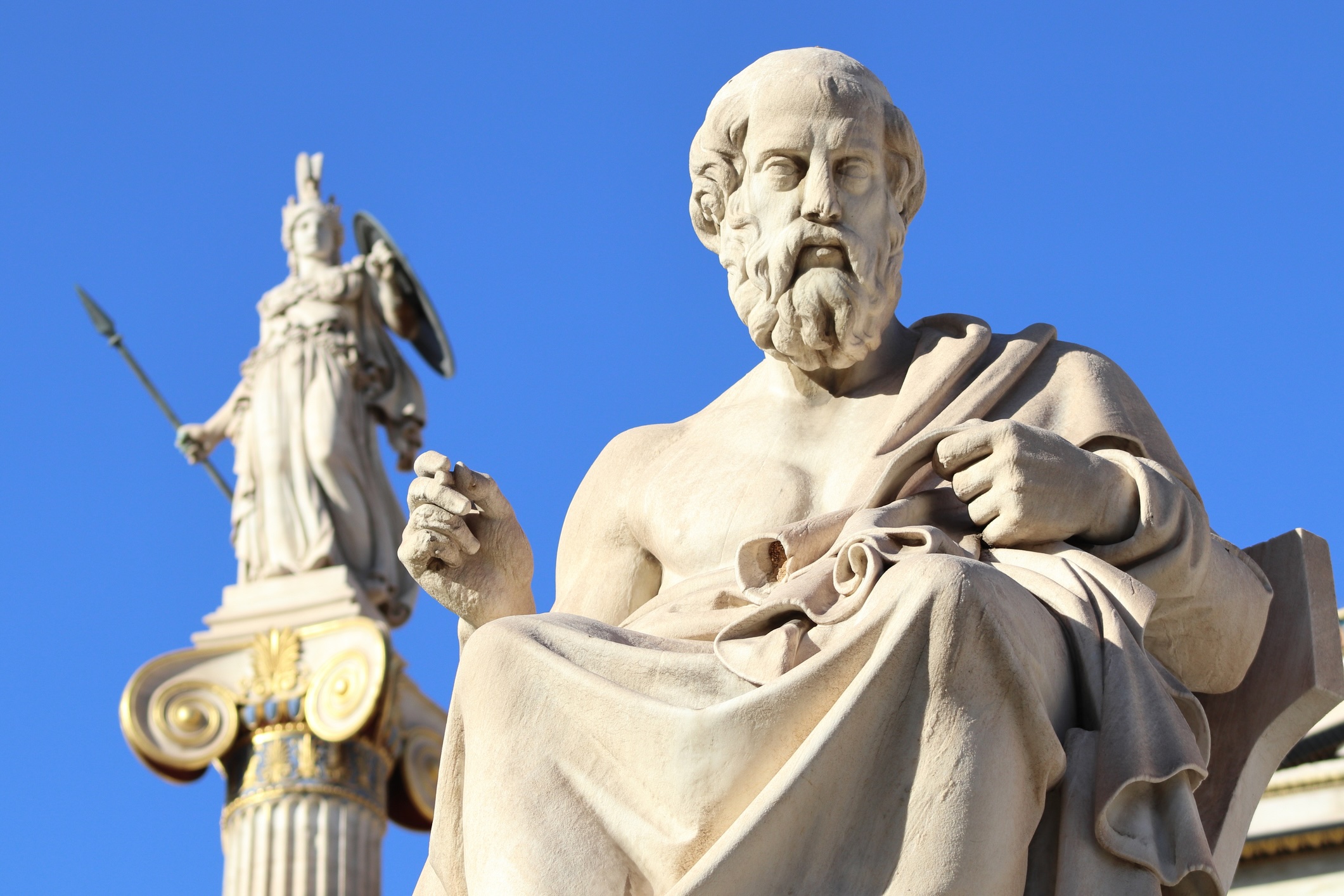
Plato is often treated as a philosopher who offers answers: the theory of Forms, the immortality of the soul, the supremacy of reason. Yet this way of reading him can be deeply misleading. Plato is less a system-builder than a thinker obsessed with problems that refuse to go away. What is knowledge? How does it differ from opinion? What does it mean for something to be real? And how can the human mind grasp reality at all?
Across dialogues such as Republic, Theaetetus, and Parmenides, Plato returns to these questions from different angles, without ever settling them once and for all. His philosophy does not resolve the tension between truth and appearance; it exposes it. The enduring power of Plato lies precisely in this refusal of closure. His questions remain indispensable because they define the conditions under which knowledge is even possible.
Knowledge and Opinion: A Foundational Distinction
One of Plato’s most persistent concerns is the distinction between epistēmē (knowledge) and doxa (opinion). This distinction is not merely semantic. It marks a fundamental divide in how the mind relates to reality.
In the Republic, Plato famously associates opinion with the visible world and knowledge with the intelligible. Opinion concerns what appears to us, what changes, what can be otherwise. Knowledge concerns what is stable, necessary, and truly real. This distinction underlies the divided line and the allegory of the cave, where most people live among shadows, mistaking appearances for reality.
Yet Plato is careful not to dismiss opinion as worthless. Opinion governs everyday life. Politics, perception, and practical decision-making all operate in its domain. The problem is not that opinion exists, but that it is mistaken for knowledge.
The difficulty lies in drawing a clear boundary between the two. How does one move from opinion to knowledge? What justifies the claim that something is known rather than merely believed? Plato insists on the distinction, but he also shows how hard it is to secure.
Theaetetus and the Failure of Definitions
The Theaetetus is Plato’s most sustained attempt to define knowledge, and it famously fails. The dialogue examines several candidate definitions: knowledge as perception, knowledge as true belief, and knowledge as true belief with an account.
Each proposal collapses under scrutiny. If knowledge is perception, then it becomes subjective and unstable. If it is true belief, then accidental correctness counts as knowledge. If it is true belief plus an account, then the nature of that account remains obscure.
What is striking is not that Plato cannot find the right definition, but that he allows the dialogue to end in aporia. No positive theory replaces the rejected ones. The reader is left with sharpened questions rather than settled doctrine.
This failure is instructive. Plato shows that knowledge cannot be reduced to psychological states or linguistic formulations. It requires a relation to reality that resists simple definition. The dialogue teaches philosophical discipline by demonstrating how easily plausible answers unravel.
Reality and the Forms in the Republic
If the Theaetetus destabilizes definitions of knowledge, the Republic offers a bold attempt to ground knowledge in reality itself. The theory of Forms emerges here not as a metaphysical luxury, but as a response to an epistemological problem.
If knowledge is stable and necessary, its objects must be stable and necessary as well. The sensible world, characterized by change and multiplicity, cannot provide this stability. Plato therefore posits Forms: intelligible realities that are what they are in a pure and unchanging way.
Justice itself, equality itself, beauty itself are not abstractions drawn from experience. They are the conditions that make experience intelligible. Without them, we could not explain how many things can be just, equal, or beautiful in varying degrees.
Yet even in the Republic, the Forms are not fully transparent. The Form of the Good, the highest principle, is said to be beyond being in dignity and power. It grounds knowledge without itself being easily known. Plato places ultimate reality at the limit of intelligibility.
This is not a defect in the theory. It is a signal that the search for what is real leads beyond what can be neatly articulated.
Parmenides and the Crisis of the Forms
If the Republic builds the theory of Forms, Parmenides threatens to dismantle it. In this dialogue, a young Socrates presents a version of the theory and is subjected to relentless criticism by Parmenides.
The objections are devastating. If Forms exist, how do particulars participate in them? Do Forms multiply endlessly? Are they separate or immanent? Do they lead to an infinite regress? The dialogue offers no easy escape.
What makes Parmenides extraordinary is that Plato allows his own most famous doctrine to be attacked with uncompromising rigor. He does not protect the Forms from critique. Instead, he radicalizes the problem of reality.
The lesson is not that the Forms are false, but that any serious account of reality faces deep conceptual difficulties. Thinking about what truly is stretches language and reason to their limits.
Truth as Orientation, Not Possession
Across these dialogues, Plato resists the idea that truth is something one simply possesses. Truth is not a set of propositions stored in the mind. It is an orientation of the soul toward what is.
This is why education in the Republic is described as turning the soul around. Learning is not the accumulation of information, but a reorientation toward reality. Error is not mere ignorance; it is misdirected attention.
Plato’s emphasis on dialectic reflects this view. Truth emerges through questioning, testing, and refinement. It is approached asymptotically, not seized definitively.
This conception explains why Plato writes dialogues rather than treatises. The form mirrors the content. Truth is something one moves toward through inquiry, not something handed down as doctrine.
Why the Problems Remain Unresolved
Plato’s questions about knowledge and reality remain unresolved because they may be inherently irresolvable. Any attempt to define knowledge presupposes some grasp of what is real. Any account of reality presupposes some notion of knowledge. The two problems are entangled.
Rather than breaking this circle, Plato makes it visible. He shows that philosophy begins when we recognize how fragile our claims to knowledge are, and how elusive reality can be.
This recognition is not paralyzing. It is productive. It motivates continued inquiry and guards against dogmatism.
Why These Questions Still Matter
Modern philosophy and science operate with far more sophisticated tools than Plato had. Yet the basic questions remain. What distinguishes knowledge from belief? How do our concepts relate to reality? What justifies claims to truth?
Plato’s dialogues do not answer these questions for us. They teach us how to ask them responsibly. They show that clarity often comes from recognizing limits rather than eliminating them.
In an age saturated with information and confident assertion, Plato’s insistence on epistemic humility is more relevant than ever.
Truth, Knowledge, and Reality According to Plato
Plato’s philosophy is not a completed system, but an ongoing search. In dialogues like Republic, Theaetetus, and Parmenides, he explores the relationship between truth, knowledge, and reality without forcing resolution where none is available.
His enduring contribution lies in showing that these problems are not obstacles to philosophy, but its very substance. To think seriously is to live with unresolved questions about what is real and how we can know it.
Plato does not give us certainty. He gives us orientation. And that may be the most valuable form of knowledge philosophy can offer.