


Journal
Why Homer Was the First Teacher of the Greeks

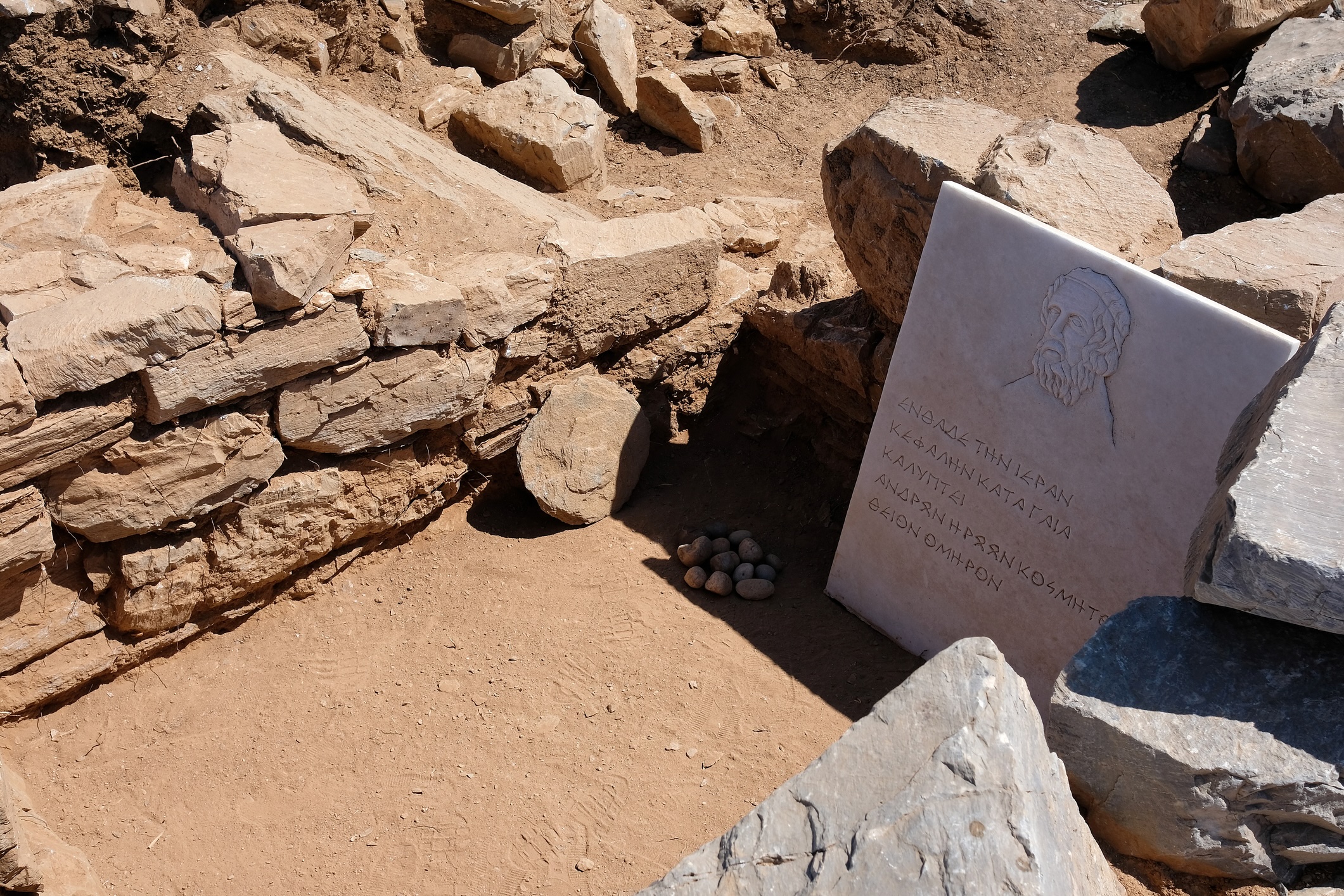
Before there were philosophers, before there were schools, before there were written laws studied in classrooms, there was Homer. For centuries, the Iliad and the Odyssey were not simply poems. They were the foundation of Greek education, the shared reference point through which Greeks learned how to speak, think, judge, and imagine themselves. Homer was not one teacher among others. He was the first teacher of the Greeks.
This claim does not mean that Homer offered doctrines or systematic instruction. His authority was deeper and more pervasive. Through epic poetry, Homer shaped moral sensibilities, social ideals, and cultural memory. Long before philosophy emerged as a distinct discipline, Homer provided the Greeks with a framework for understanding human excellence, failure, and responsibility.
Education Before Schools
In archaic Greece, education was not institutionalized. There were no curricula, no textbooks in the modern sense, and no professional teachers charged with shaping citizens from childhood. Learning took place through participation in communal life, through ritual, song, and storytelling.
Epic poetry occupied a central place in this world. The Iliad and the Odyssey were performed aloud at festivals and gatherings. They were memorized, recited, and internalized. To know Homer was to share a cultural language.
This mode of education was immersive rather than instructional. Homer did not teach by telling audiences what to think. He taught by presenting models of action and inviting judgment. Learning took place through repeated exposure to stories that shaped imagination and emotion.
Homer as Moral Reference
Homer’s authority rested in part on his role as a moral reference point. When Greeks debated courage, honor, loyalty, or justice, they did so against the backdrop of Homeric scenes and characters. Achilles, Hector, Odysseus, and Penelope provided concrete images through which abstract values became intelligible.
Importantly, Homer does not present simple moral lessons. His characters are admirable and troubling at once. Achilles embodies courage and excess. Hector is noble yet doomed. Odysseus is clever and deceptive, faithful and ruthless.
This complexity is educational rather than confusing. It teaches that moral life is not governed by rules alone. Judgment requires attention to circumstance, motive, and consequence. Homer trains moral perception rather than obedience.
Language, Memory, and Cultural Unity
Homer also functioned as a linguistic educator. The epics preserved and standardized poetic language across regions and generations. They gave Greeks a shared vocabulary for describing action, emotion, and value.
This shared language mattered politically and culturally. Greece was not a unified state. It was a collection of city-states with distinct customs and interests. Homer provided a common narrative world in which Greeks could recognize themselves as part of a broader culture.
To quote Homer was to appeal to authority. His verses carried weight because they were known and respected. Cultural memory and moral authority converged in his poetry.
Models of Excellence and Its Limits
Homeric education is not aspirational in a naive sense. The epics show excellence under strain. Heroism leads to glory, but also to loss. Intelligence secures survival, but demands compromise.
By showing the costs of excellence, Homer teaches restraint. Achilles’ rage is magnificent and destructive. Odysseus’ cunning saves him and endangers others. No virtue appears without shadow.
This balanced presentation prevents moral simplification. It trains Greeks to admire without idolizing and to criticize without cynicism. Education, in this sense, is the cultivation of discernment.
The Gods as Part of Education
Homer’s gods play an educational role as well. They intervene, deceive, quarrel, and take sides. They are powerful but not morally perfect.
This portrayal teaches something crucial. The world is not governed by transparent justice. Fortune, conflict, and partiality shape outcomes. Humans must act without guarantees.
Rather than offering comfort, Homer prepares his audience for uncertainty. He teaches how to live in a world where responsibility persists even when order is unstable.
Homer and the Birth of Philosophy
Later Greek thinkers were acutely aware of Homer’s authority. Plato criticizes him precisely because he recognizes his formative power. Philosophers do not replace Homer. They respond to him.
Many philosophical questions arise directly from Homeric material. What is justice when heroes act brutally. What is courage when it leads to ruin. What is intelligence when it involves deception.
Philosophy emerges as a second-order reflection on the world Homer already made intelligible. Homer teaches Greeks what matters. Philosophy asks why and whether it should.
In this sense, Homer is prior not only historically, but conceptually.
Education as Formation, Not Instruction
Homer’s educational power lies in formation rather than instruction. The epics shape emotional responses. They teach what to fear, what to admire, and what to mourn.
This affective education is fundamental. Before one can reason about virtue, one must care about it. Homer cultivates this care.
By engaging the emotions, Homer makes ethical reflection possible. His poems do not dictate conclusions. They create the conditions for judgment.
Authority Without Dogma
Homer’s authority is paradoxical. He is authoritative without being dogmatic. He offers no commandments, no explicit moral code.
This is precisely why he endures. His authority does not rest on answers, but on depth. He shows life as complex, demanding, and meaningful.
Greeks could return to Homer again and again because his poetry accommodated new interpretations. He was not exhausted by a single reading.
Why This Still Matters
Understanding Homer as the first teacher of the Greeks helps explain why literature matters for education more broadly. Homer shows that moral and cultural formation precedes theory.
In modern societies, education is often reduced to information transfer. Homer reminds us that education begins with imagination, memory, and shared narratives.
The questions that philosophy later formalizes are first encountered in story. How should one act. What is worth suffering for. What does it mean to return home changed.
Homer taught the Greeks how to ask these questions by living with them.
The Educational Side of Homer
Homer was the first teacher of the Greeks because he shaped how they understood themselves before they analyzed themselves. His epics educated without instructing, guided without commanding, and formed judgment without closing inquiry.
Long before schools and philosophers, Homer provided a moral and cultural education that made later thought possible. He taught the Greeks not what to think, but how to see human life in its full complexity.
That is why his authority endured, and why his poems remain educational long after their world has passed.