


Journal
From City-States to Empires: How the Ancients Learned to Think Big

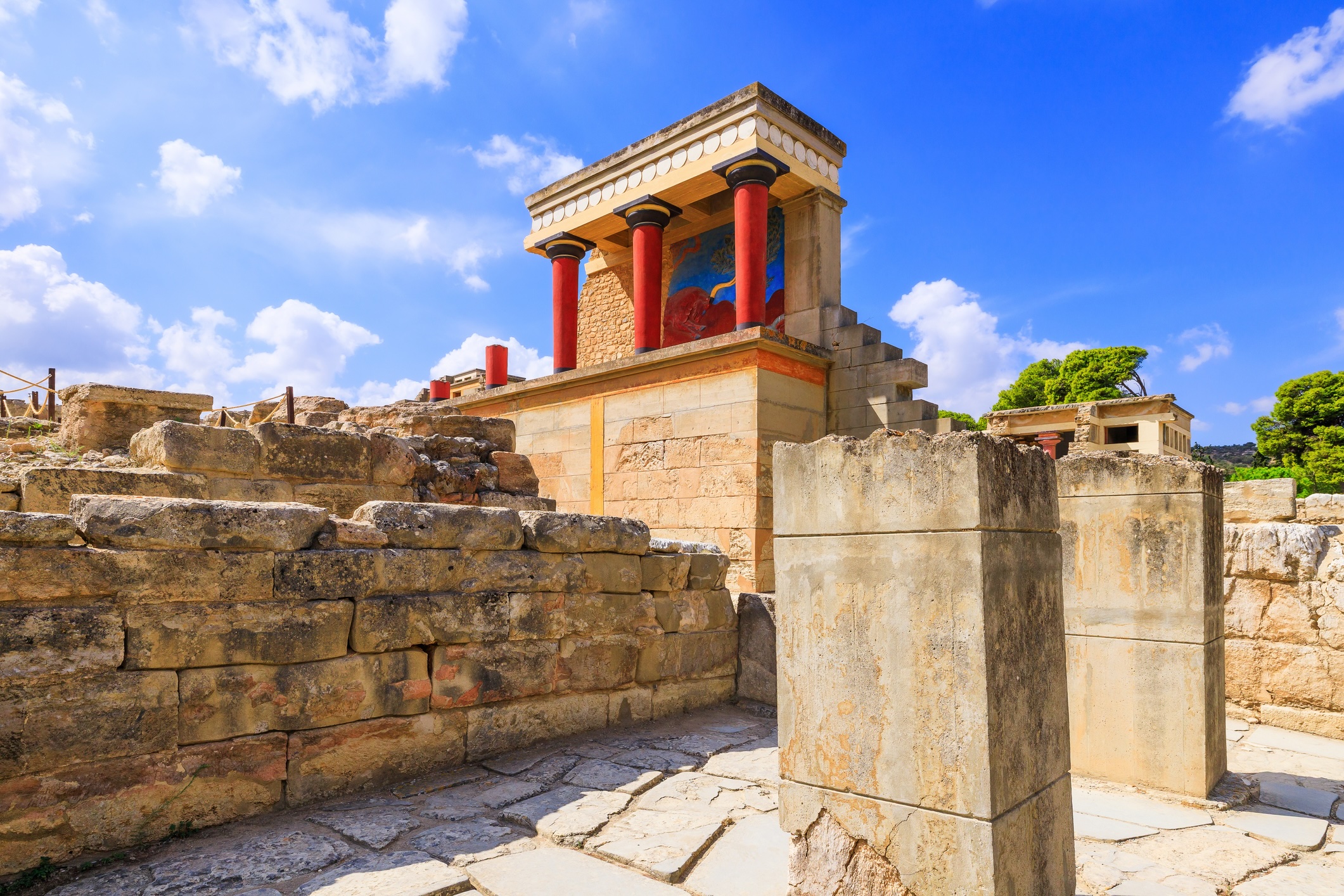
For much of early Greek history, the world was small. Political life centered on the city-state, the polis, a community that could be seen, walked, argued with, and defended. Loyalty, memory, and identity were local. History meant the deeds of one’s ancestors, the founding of one’s city, the wars fought with neighboring rivals. The horizon of meaning rarely extended far beyond familiar coastlines.
Yet by the Hellenistic and Roman periods, ancient writers were thinking on a radically different scale. History came to encompass the entire Mediterranean and beyond. Peoples, kingdoms, climates, economies, and cultures were woven into vast narratives of rise, expansion, and domination. The world had become large, interconnected, and intelligible as a whole.
This transformation was not only political or military. It was intellectual. The ancients had to learn how to think big. The shift from city-state histories to imperial narratives required new concepts of causation, time, space, and human diversity. In learning to describe empires, ancient thinkers also redefined what history was for.
The Local Horizon of the Polis
Early Greek historical consciousness was deeply local. Communities told stories about their founders, their gods, their customs, and their conflicts with nearby rivals. Even when myth reached back into a heroic past, it was anchored to particular places. Troy mattered because of its relation to specific Greek cities. Heroes mattered because they were ancestors.
Herodotus, often called the father of history, still writes within this framework even as he stretches it. His inquiry into the Persian Wars remains centered on the Greek experience, on how independent poleis confronted an external threat. His curiosity about Egypt, Scythia, and Persia is remarkable, but these cultures are presented largely in relation to Greece.
The polis shaped not only political life but historical explanation. Events were understood in terms of character, honor, hubris, and divine favor. Causes were moral and personal as much as structural. History was something that happened to communities with faces and names.
Expansion and the Shock of Scale
The conquests of Alexander the Great shattered the limits of this worldview. In a single generation, Greek-speaking elites found themselves ruling territories that stretched from the Aegean to the Indus. Cities were no longer sovereign worlds unto themselves but nodes in vast networks of power.
This expansion created a problem of comprehension. How could events on such a scale be narrated? How could one explain the rise and fall of kingdoms rather than cities, or the movement of peoples rather than families? The traditional tools of local history were no longer sufficient.
Hellenistic historians responded by widening their scope. Geography became essential. So did ethnography, chronology, and administration. History now required maps, timelines, and comparative analysis. The world had to be organized conceptually before it could be narrated.
From Memory to Structure
One of the key intellectual shifts in imperial historiography is the move from memory to structure. Local histories rely heavily on collective memory, on what a community remembers about itself. Imperial histories cannot depend on shared memory. No one remembers the whole empire.
Instead, historians begin to think in terms of systems. Trade routes connect regions. Military logistics determine outcomes. Climate, terrain, and distance shape political possibilities. Individual decisions still matter, but they operate within larger constraints.
Polybius is emblematic of this shift. Writing about Rome’s rise to dominance, he insists that history must explain not isolated events but processes. His famous insistence on universal history reflects a new ambition. To understand Rome, one must understand the entire Mediterranean, because Rome’s power reshaped all of it.
History becomes analytical rather than commemorative. Its task is not to preserve local pride but to explain global transformation.
Empire and the Problem of Diversity
Thinking big also meant thinking about difference. Empires encompass many peoples, languages, customs, and religions. Ancient historians could no longer assume a shared moral or cultural framework.
This forced a new kind of comparative thinking. Customs were described, contrasted, and sometimes explained rather than simply judged. Laws, religions, and political systems became objects of study.
This did not produce modern cultural relativism, but it did produce a broader curiosity. Writers like Strabo and Diodorus Siculus attempt to integrate geography, history, and ethnography into unified accounts of the known world. Difference becomes something to be mapped and narrated rather than erased.
At the same time, Εmpire encouraged hierarchies of value. Universal history often implied universal judgment. The question was no longer which city was just, but which political order was destined to rule. Scale introduced both inclusiveness and domination.
Rome and the Master Narrative
Roman expansion completed this intellectual transformation. Rome did not merely rule a large territory. It understood itself as the center of a world-historical process. Roman historians wrote with an awareness that their city had become the axis of history.
Livy’s massive history of Rome begins as a city narrative but grows into something much larger. By the time Rome controls the Mediterranean, its story becomes inseparable from that of other peoples. Foreign wars are no longer peripheral episodes. They are the mechanism through which history unfolds.
Roman historians also introduce a new temporal scale. History stretches across centuries with a sense of accumulation. Institutions evolve. Moral character rises and declines. Corruption becomes a systemic problem rather than an individual flaw. The Empire demands long timeframes, forcing historians to think in terms of durability, decay, and legacy.
Intellectual Costs and Gains
The move from city-state histories to imperial narratives brought gains in scope and explanatory power, but also losses. Local voices are often submerged. Small-scale experiences disappear into grand arcs of conquest and decline.
Yet something essential is gained. History becomes a tool for understanding complexity. It can now ask how economies interact, how cultures influence one another, and how power reorganizes the world.
This expanded perspective also enables critique. By seeing patterns across regions and centuries, historians can question inevitability. They can ask whether empire is a natural outcome or a contingent achievement. Thinking big allows for skepticism as well as awe.
Why This Shift From City-States to Empires Matters
The ancient transition from local to imperial thinking laid the groundwork for later historical consciousness. It taught writers to integrate geography, politics, economics, and culture into unified narratives. It also revealed the dangers of scale, the ease with which human suffering can be abstracted when viewed from above.
Modern global history inherits this tension. We still struggle to balance breadth with detail, structure with agency, explanation with empathy. The ancients faced these challenges first, and their solutions remain instructive.
An Achievement that Shaped the World as We Know it
The move from city-states to empires forced the ancients to rethink what history was and what it could do. As political power expanded, so did intellectual ambition. History grew from a record of local deeds into an attempt to understand the world as an interconnected whole.
In learning to think big, ancient historians changed not only their subject matter but their methods. They developed new ways of explaining causation, diversity, and time. Their achievement was not simply to describe empires, but to invent the conceptual tools needed to make sense of a large and complex world.
That achievement still shapes how we tell history today.