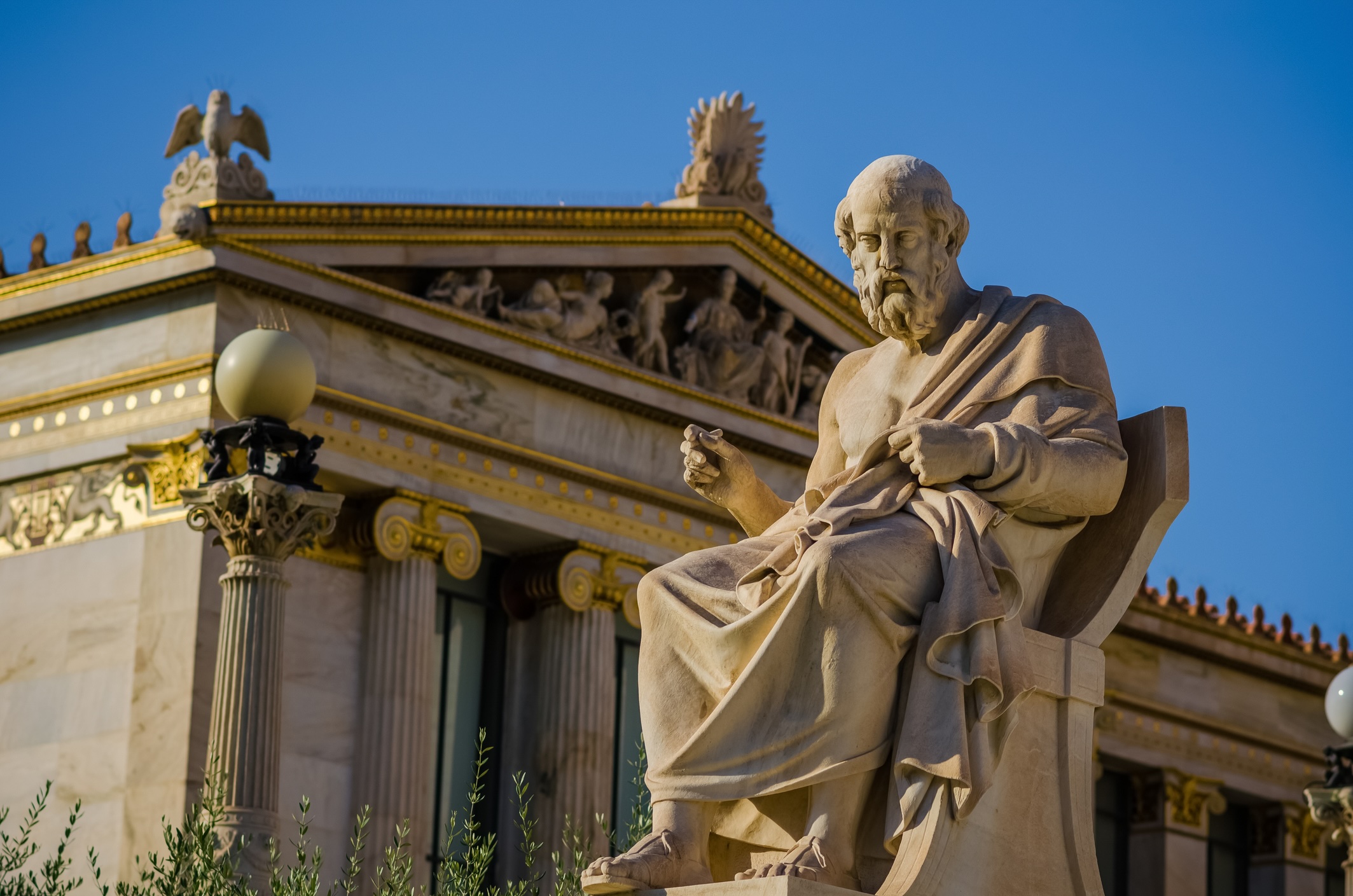
Plato did not simply contribute to philosophy. He shaped what philosophy is. Long before philosophy became an academic discipline, Plato presented it as a serious, demanding, and systematic pursuit of truth. He treated it as more than clever arguments or public debate. For Plato, philosophy was a way of life and an intellectual project that could organize how humans think about reality, morality, society, and education.
Many thinkers before him asked deep questions about nature, the gods, justice, and knowledge. What Plato did differently was to build a unified framework that connected these questions into a single agenda. He made ethics inseparable from knowledge, politics inseparable from human nature, metaphysics inseparable from education.
Even today, contemporary philosophy still follows pathways Plato opened. Whether a philosopher works in ethics, political theory, epistemology, metaphysics, philosophy of mind, or education, Plato’s influence is never far away.
Plato made Philosophy a Disciplined Search for Truth
Plato’s greatest achievement was turning philosophy into a systematic pursuit, not a casual conversation or a rhetorical contest. He believed truth mattered more than persuasion, and that genuine thinking required structure, patience, and intellectual honesty. This is one reason Plato wrote dialogues rather than simple lectures. He wanted philosophy to look like real thinking in motion: questions, challenges, revisions, and deeper clarity over time.
Plato also insisted that truth is not decided by popularity. Many people believe what is convenient, familiar, or socially rewarded. Plato challenged that tendency. He argued that philosophy must resist public opinion when public opinion is confused.
This commitment still defines contemporary philosophy, which often asks unpopular questions and refuses easy answers.
In Plato’s view, philosophy begins when we admit we do not truly know what we claim to know. This is the deeper meaning behind the Socratic method found in his dialogues. The goal is not to embarrass someone. The goal is to expose false certainty and make room for real understanding.
By treating philosophy as a discipline rather than a performance, Plato gave it a unique identity. Philosophy became the practice of examining assumptions, defining concepts, and building arguments that aim at truth rather than victory. This remains one of the strongest ideals in philosophical thinking today.
He united Ethics and Knowledge into one philosophical mission
One of Plato’s most defining ideas is that knowledge and morality belong together. For Plato, ethics is not simply about following rules or traditions. Ethics is about understanding the good. And understanding the good requires knowledge, not just habit.
This connection creates a powerful question: if someone truly knows what is good, why would they choose evil? Plato often suggests that wrongdoing is linked to ignorance or confusion about what is truly valuable. While modern philosophers debate this, the structure of the question still shapes ethical theory. Plato makes moral life an intellectual challenge, not merely a social one.
Plato also treats the soul as something that can be improved. Ethical growth depends on education, reflection, and inner discipline. This transforms morality into something deeper than obeying laws. It becomes a project of self-development guided by reason.
Plato built political philosophy around the question of justice
Plato did not treat politics as a technical field or a struggle for control. He treated it as a moral problem. The central political question for Plato is justice, and his most famous attempt to answer it appears in the Republic. This dialogue does not just describe a government system. It asks what justice is in a city and in a person, and whether a just life is truly better than an unjust one.
Plato’s political thinking connects power to knowledge and virtue. He argues that leadership should require wisdom, not simply ambition. This idea remains controversial, but it shaped the entire tradition of political philosophy. It forces later thinkers to address a hard issue: should political authority be based on expertise, moral character, the will of the people, or some combination?
Plato also introduces the concept that a society’s structure influences the minds of its citizens. Politics is never neutral. Laws, education, culture, and institutions shape what people value. This is one of Plato’s most modern insights. It suggests that political philosophy must include psychology, ethics, and social design.
He transformed metaphysics into a serious philosophical task
Plato made metaphysics central to philosophy by asking what reality truly is beneath appearances. He believed the visible world is not the full story.
Things change, decay, and differ depending on viewpoint. If knowledge is possible, Plato argued, it must refer to something stable and intelligible.
This is where Plato’s theory of Forms becomes one of his most influential contributions. The Forms represent perfect, unchanging realities that give meaning to the imperfect versions we encounter in daily life. Justice, beauty, equality, and goodness are not just opinions. For Plato, they are real standards that exist beyond individual preference.
Even if modern philosophers reject Plato’s metaphysics, they still inherit his question: what kind of reality makes knowledge possible? Plato forces philosophy to ask whether truth is objective or relative, and whether values are real or socially constructed.
This Platonic foundation shaped the entire history of metaphysics. It influenced later thinkers in ancient philosophy, medieval theology, and modern debates about universals, abstract objects, and the nature of meaning.
Plato made education the core of human development
Plato’s philosophy is also an educational project. He believed a person cannot become just, wise, or free without learning how to think. Education, for Plato, is not just training for work. It is the formation of the mind and the soul.
In the Republic, education shapes the type of citizens a society produces. In other dialogues, Plato describes learning as a turning of the soul toward truth. This suggests that ignorance is not only a lack of information. It is a condition of misdirection, where attention is focused on shallow goals instead of deeper reality.
Plato’s famous image of the cave captures this idea. People can live surrounded by appearances, mistaking shadows for truth. Philosophy and education are the escape. This remains one of the most powerful metaphors in the history of thought because it describes a timeless human risk: believing what is easy instead of what is true.
Modern education still reflects Platonic questions. What is the purpose of learning? Is it skill, citizenship, self-knowledge, or moral growth? Should education teach facts or teach reasoning? Plato forces us to see that education is never neutral. It shapes what kind of life people believe is worth living.
Plato still sets the agenda for Philosophy today
Plato defined contemporary philosophy because he gave it structure, ambition, and unity. He connected ethics, knowledge, politics, metaphysics, and education into one intellectual project. Philosophy became, through Plato, the disciplined search for truth and the attempt to build a life aligned with it.
Even when philosophers disagree with Plato, they often argue within the boundaries he created. They debate truth, justice, knowledge, virtue, and reality using questions that Plato made central. That is why Plato is not merely an ancient author. He is one of the main reasons philosophy exists in the form we recognize today.