
Journal
Demosthenes and the Power of Political Speech

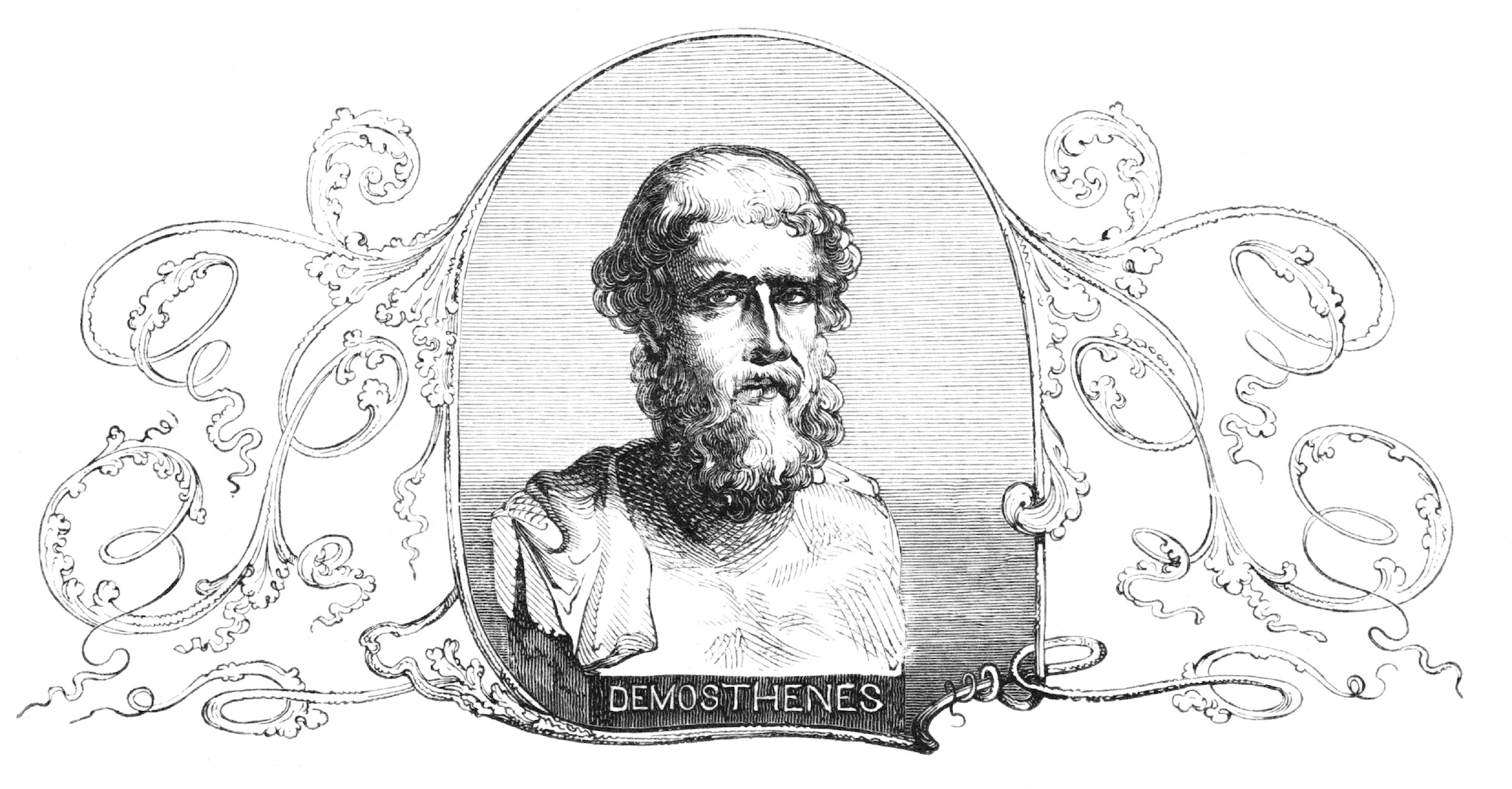
In the annals of political oratory, few figures loom as large as Demosthenes, the Athenian statesman and speechwriter whose fierce commitment to civic responsibility and rhetorical mastery turned words into a weapon of resistance. Living in an era of crisis and decline, as Athens struggled against the rising power of Macedon, Demosthenes recognized that speech was not merely a tool of persuasion but a moral and political act.
More than 2,000 years later, his speeches remain a powerful testament to the idea that language can shape history, especially when spoken in defense of democracy.
Who was Demosthenes?
Born in 384 BCE in Athens, Demosthenes rose from relative obscurity to become one of the greatest orators of antiquity. He overcame a speech impediment through rigorous self-training, developing a style that was precise, forceful, and intellectually rigorous. In the volatile political environment of 4th-century BCE Athens, marked by internal strife and external threats, Demosthenes emerged as a passionate defender of Athenian autonomy and democratic values.
His most famous works, the Philippics and Olynthiacs, were direct attacks on Philip II of Macedon, warning Athens of the growing threat to its independence. These speeches were not only calls to arms but also calls to conscience.
Rhetoric as Resistance
In the face of Macedonian expansionism, Demosthenes wielded rhetoric as a form of resistance. His speeches aimed not just to inform or persuade but to awaken the political will of the Athenian people.
Unlike the sophists, who often treated rhetoric as a neutral skill for winning arguments, Demosthenes believed that speech had a moral dimension. To speak politically was to accept responsibility for the fate of the polis. His rhetoric fused clarity, urgency, and moral seriousness, challenging his fellow citizens to rise to the occasion.
Consider the First Philippic, where Demosthenes warns:
“It is not with stones or bricks that a city is made, but with men; and it is the spirit of the citizens that makes the strength of the state.”
Here, we see rhetoric functioning not just as persuasion, but as mobilization, an attempt to stir citizens from complacency to action. For Demosthenes, silence in the face of tyranny was complicity.
Urgency and the Rhetoric of Crisis
Demosthenes did not write for an abstract future or an idealized audience. His speeches were delivered in moments of political crisis, where time was short and consequences immediate. This imbued his rhetoric with a profound sense of urgency.
He often contrasted the decisive action of Macedon with the indecision of the Athenian assembly, using rhetorical questions, invective, and appeals to shared history to shame his audience into response. His style was not ornamental but deliberately provocative.
One of his strategies was to remind Athenians of their past glory and juxtapose it with their current inaction:
“Your ancestors chose to suffer every hardship for freedom’s sake; but you, what are you doing today?”
Such appeals cut to the core of Athenian identity. They challenged citizens not only to see the threat but to see themselves as responsible for meeting it.
Civic Responsibility and the Ethics of Speech
Demosthenes’ speeches consistently emphasized that political participation was not optional in a democracy; it was a duty. In this view, rhetoric is a civic act, bound by ethical obligation. To speak is to take a stand; to remain silent in the face of injustice is to surrender the moral terrain.
This idea of rhetoric as civic responsibility resonates deeply in democratic theory. Ancient Athens practiced a form of direct democracy, where citizens gathered in the assembly to debate and vote on policy. But as Demosthenes saw, democracy could collapse not just through external conquest but through internal apathy.
By urging his audience to think, deliberate, and act, Demosthenes highlighted a truth that remains relevant; democracy requires active citizens. His speeches are an early articulation of the notion that the health of a republic depends on the speech of the engaged; those willing to speak truth to power, challenge inertia, and call others to responsibility.
Lessons for Today
In an age of political polarization, media saturation, and crisis fatigue, the example of Demosthenes speaks with renewed relevance. His work invites us to reconsider several enduring questions:
- What is the role of speech in defending democratic values?
- Can rhetoric serve as a form of resistance without descending into demagoguery?
- What does it mean to speak not just persuasively, but responsibly?
The modern public sphere, whether in legislative chambers, courtrooms, classrooms, or online platforms, still relies on the power of speech to inform, inspire, and mobilize. But as Demosthenes warned, speech without substance, and citizenship without courage, can erode the very foundation of political life.
A voice that echoes across time
Demosthenes ultimately failed in his immediate political mission, Athens fell to Macedon, and democratic autonomy was lost. But the moral force of his speeches endured. Even in defeat, his voice became a symbol of principled resistance. Later thinkers from Cicero to Thomas Jefferson admired him as the archetype of the courageous orator.
Indeed, what makes Demosthenes remarkable is not just the eloquence of his speech but the integrity of his message. He believed in the power of words to confront power, and he accepted the risks of doing so.
In this way, Demosthenes reminds us that political speech is not neutral. It is a choice, often a courageous one, to take part in the shaping of a shared world.
The Political Ethics of Speech
The life and legacy of Demosthenes compel us to see rhetoric not as manipulation, but as moral action. At its best, political speech can resist tyranny, rally the disheartened, and call a people back to itself. But it demands both courage and responsibility. Demosthenes modeled both in his public life.
As citizens and leaders confront the crises of our own time, the lesson from Demosthenes is clear; speech matters, not only in what it says, but in why and when it is spoken.
In moments of political crisis, rhetoric becomes more than art; it becomes resistance.