
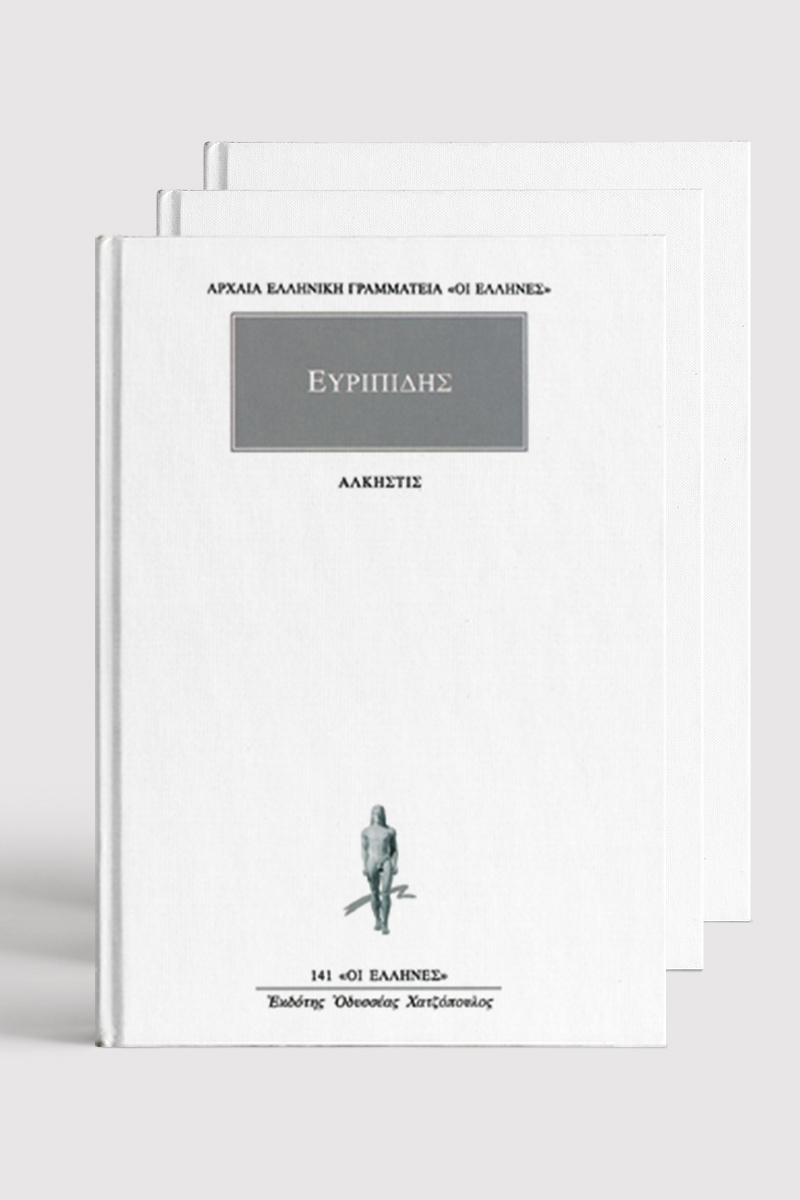


Euripides – The Complete Plays Collection

320.00

“Whom the gods wish to destroy, they first make mad.” – Euripides, Medea

Weight 6 kg
0 People watching this product now!
SKU: MTG10112 Weight: 6 kg Category:
Language: Ancient Greek & Greek
Volumes: 27
Description

Euripides first participated in dramatic competitions in 455 B.C., yet he did not win until 441 B.C., and over his entire life he won only five prizes. This was because his progressive ideas often angered the conservative judges, while he was admired by younger audiences, earning him the title of the “beloved tragic poet”.

What were Euripides’ innovations?

First, the lengthy prologues, used to narrate the backstory instead of relying solely on dialogue. Next, the introduction of the “deus ex machina” technique, in which a god would appear, often flying, to resolve the complex plots of the tragedies. Finally, his language was notably elegant, admired even by his critics, and his works contained philosophical teachings, earning him a second title, that of the “philosopher on the stage.”

Euripides stands apart from Aeschylus and Sophocles in his depiction of realism, avoiding supernatural or idealized elements and thus serving as a mirror of his time. Humans are responsible for what is happening to them, rather than the gods. Due to the lack of deep religiosity in his works, he was accused of atheism. The issues that concerned him included human rights, the position of women, and the use of violence.

What makes Euripides unique?

He has been described by Aristotle as the “most tragic of all poets”, as he shifts the tragic conflict from the external to the internal level. While in other poets the heroes struggle against supernatural forces, such as Fate, and ultimately succumb, Euripides highlights the inner life of his heroes, portraying them with reason, duty, and conflicting desires.

What does the Euripides Complete Works Collection include?

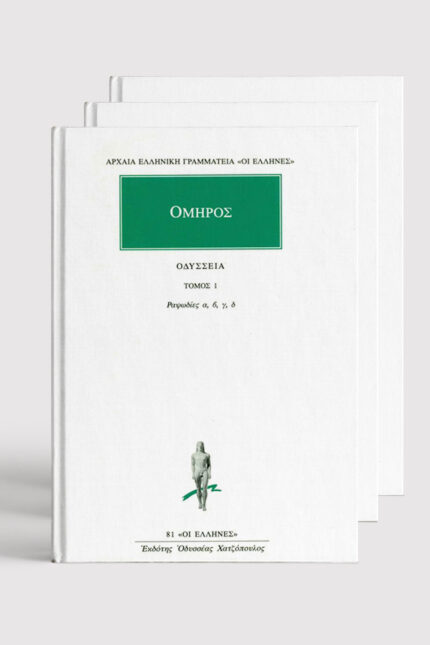
The “Euripides Complete Works Collection”, which includes the original ancient text, modern Greek translation, and commentary, consists of 27 volumes and includes:

  • Andromache
  • Bacchae
  • Cretans
  • Cyclops
  • Electra
  • Hecuba
  • Helen
  • Heracleidae
  • Heracles Furens
  • Hippolytus
  • Hypsipyle
  • Ion
  • Iphigenia in Aulis
  • Iphigenia in Tauris
  • Medea
  • Orestes
  • Phoenissae
  • Rhesus
  • Suppliants
  • Troads
  • Alcestis
  • Fragments 1-6

From our Journal

F.A.Q.
What is the Euripides Complete Works Collection?

It is a 27-volume collection that presents Euripides’ 21 complete surviving tragedies plus 6 volumes of rare fragments of works that did not survive in their complete form, offering readers a full view of one of the most influential and innovative playwrights of ancient Greece.

What were Euripides’ major innovations in tragedy?

He introduced long prologues to explain the backstory, used the “deus ex machina” device to resolve complex plots, and wrote in an elegant style that often carried strong philosophical ideas.

What makes Euripides stand out?

Euripides stands out for his realism, focusing on human responsibility rather than divine forces, and for raising bold themes such as women’s position, human rights, and the consequences of violence.

What makes Euripides unique as a tragic poet?

He was described by Aristotle as the “most tragic of all poets” because he brings tragedy inward, showing characters torn between reason, duty, and desire, and turning the deepest conflict into a psychological one.