The life and work of the first great sages of antiquity, who laid the foundations of the sciences—astronomy, mathematics, mechanics, medicine—as well as rhetoric, politics, and legal thought.
The 20 volumes of the series include Democritus, Pythagoras, Thales, Heraclitus, Zeno of Elea, Parmenides, Anaximander, and nearly 100 other Presocratic philosophers who left their mark across the centuries.
What does the term “Presocratics” refer to?
The term “Presocratics” refers to the earliest Greek philosophers who appeared before Socrates and are often also described as “physikoi” (“natural philosophers”), since their interest focused on nature, the structure of the world, and the origin of all things.
This group also includes the earliest Sophists, who played a decisive role in the transition from natural philosophy to a more human-centered form of thought.
Who were the Presocratic Philosophers?
Presocratic philosophy was born in Ionia, in the Greek colonies along the coast of Asia Minor, and represents the first systematic attempt to link philosophy with science. The Presocratics sought to interpret the world not through myth, but through reason, searching for the archē—the first principle or essence of being—and thus laying the foundations of scientific thinking.
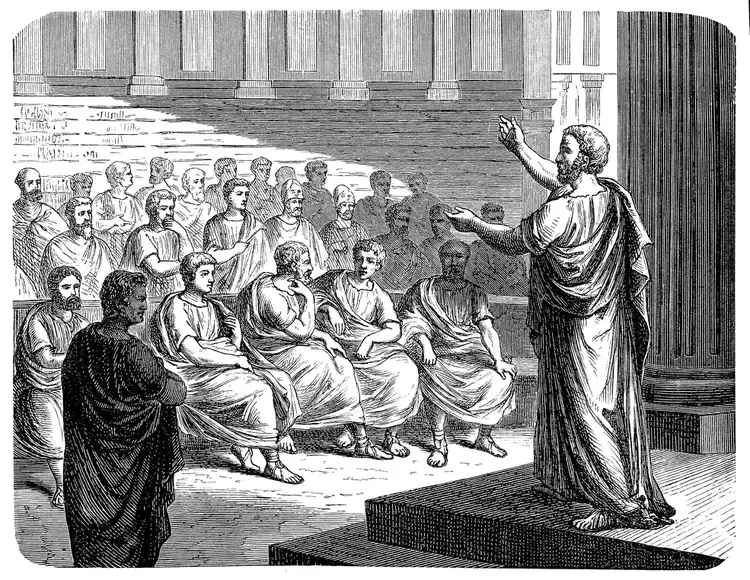
They were poets, lawgivers, and politicians, but above all scientists, engaging with fields such as astronomy, geometry, mathematics, theoretical mechanics, and medicine. At the same time, they acted as teachers of philosophy and rhetoric, encouraging dialogue, questioning, and the development of critical thought—elements that would shape the later intellectual tradition of the West.
During the 6th century BCE, the concept of wisdom acquired a new meaning: the wise were no longer only those active in the arts or politics, but also those who cultivated the sciences and theoretical knowledge. The Presocratics expressed themselves in both poetry and prose; however, their works have not survived intact, but only in fragments preserved through quotations and references by later authors such as Plato, Aristotle, Plutarch, Sextus Empiricus, and others.
What does the Presocratic Philosophers Collection include?
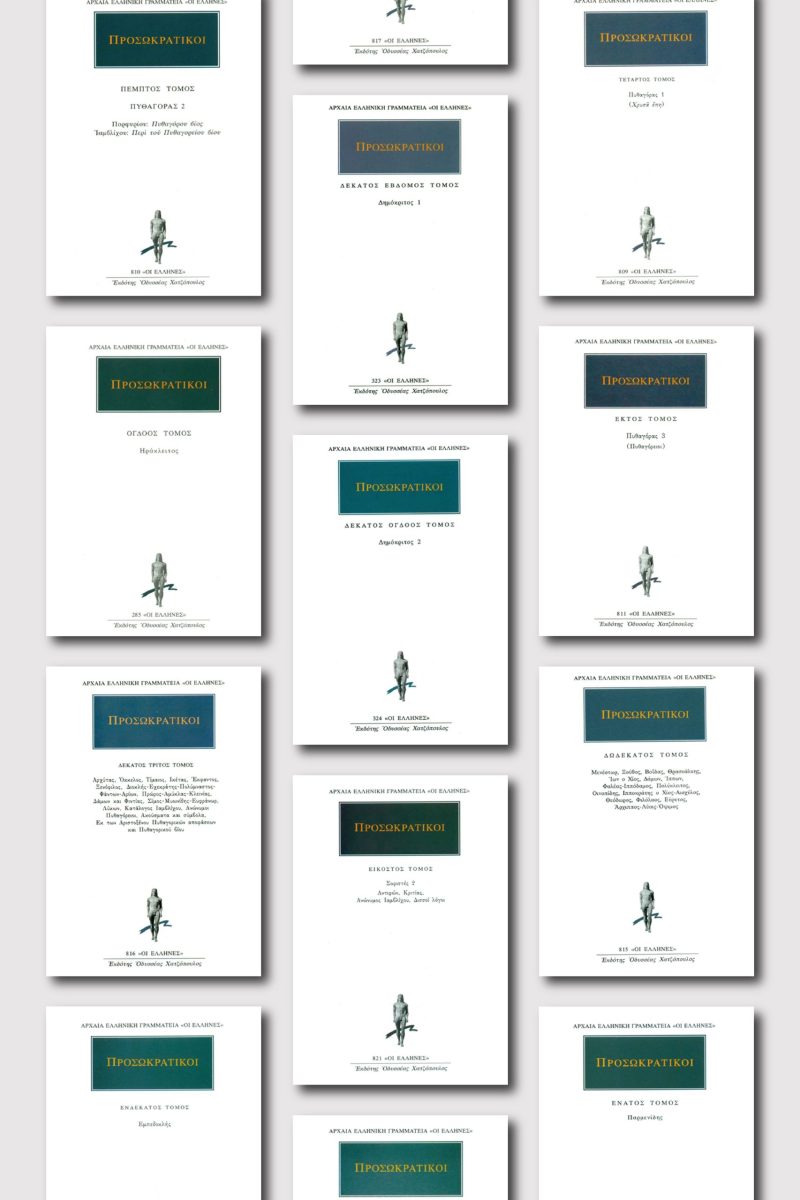
The Presocratic Philosophers Collection consists of 20 volumes, in which each text is presented with the original Ancient Greek, an authoritative modern Greek translation, and detailed philological and philosophical commentary. More specifically, it includes:
- Orpheus, Musaeus, Epimenides, Hesiod, Phocus, Cleostratus, Pherecydes, Theagenes, Acusilaus, Seven Sages — Complete Works 1
- Thales, Anaximander, Anaximenes — Complete Works 2
- Cercops, Petron, Brontinus, Hippasus, Calliphon and Democedes, Parm(en)iscus, Epicharmus, Parmen, Alcmaeon, Ameinias, Iccus — Complete Works 3
- Pythagoras I: Golden Verses — Complete Works 4
- Pythagoras II: Porphyry, Life of Pythagoras; Iamblichus, On the Pythagorean Life — Complete Works 5
- Pythagoras III: The Pythagoreans — Complete Works 6
- Xenophanes — Complete Works 7
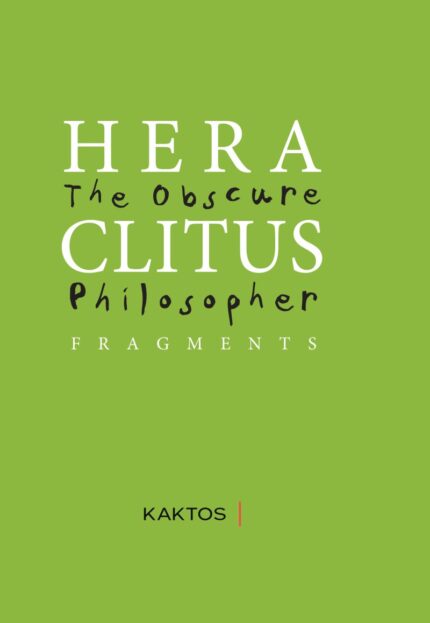
- Heraclitus of Ephesus — Complete Works 8
- Parmenides — Complete Works 9
- Zeno of Elea, Melissus — Complete Works 10
- Empedocles — Complete Works 11
- Menestor, Xouthos, Boidas, Thrasyalkes, Ion of Chios, Damon, Hippon, Phaleas–Hippodamus, Polyclitus, Oenopides, Hippocrates of Chios, Aeschylus, Theodorus, Philolaus, Eurytus,
- Archippus, Lysis, Opsimus — Complete Works 12
Archytas, Occelus, Timaeus, Icetas, Ecphantus, Xenophilus, Diocles–Echecrates–Polymnastus–Phanton–Arion, Prorus–Amyclas–Cleinias, Damon and Phintias, Simon, Myonides–Euphranor, Lycon, Catalogue of Iamblichus, Anonymous Pythagoreans, Sayings and Symbols, from Aristoxenus’ Pythagorean Doctrines and Life — Complete Works 13 - Anaxagoras — Complete Works 14
- Archelaus, Metrodorus of Lampsacus, Cleidemus, Idaeus, Diogenes of Apollonia, Cratylus, Antisthenes the Heraclitean — Complete Works 15
- Leucippus, Nessas, Metrodorus of Chios, Diogenes of Smyrna, Anaxarchus, Hecataeus of Abdera, Apollodorus, Nausiphanes, Diosimus, Bion of Abdera, Bolus — Complete Works 16
- Democritus I — Complete Works 17
- Democritus II — Complete Works 18
- Sophists I: Protagoras, Xeniades, Gorgias, Lycophron, Prodicus, Thrasymachus, Hippias — Complete Works 19
- Sophists II: Antiphon, Critias, Anonymous of Iamblichus, Dissoi Logoi — Complete Works 20
Presocratic philosophy is rightly regarded as the source of the philosophical and scientific spirit that developed in later centuries. The evolution of modern sciences such as physics, mathematics, astronomy, and geometry rests upon these early thinkers, on whose “shoulders” the entire later edifice of theoretical knowledge was built.
The series is addressed to students, researchers, and educators in philosophy and classical studies, as well as to any reader who wishes to explore the origins of scientific and philosophical thought.