


Journal
Alexander the Great Through Greek Eyes

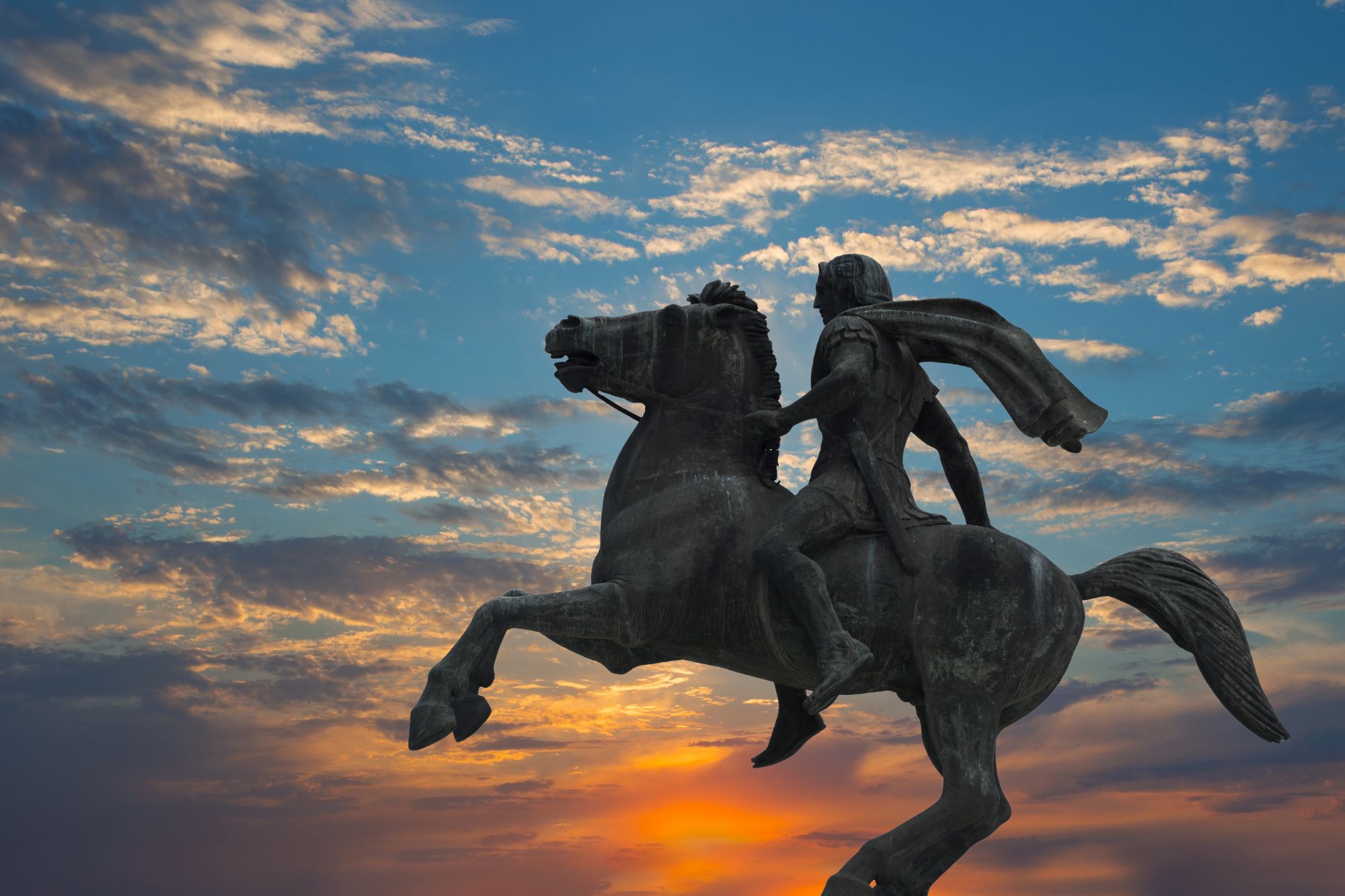
Alexander the Great is often presented as a universal hero, a military genius, and a symbol of unstoppable ambition. Yet the way people understand him depends greatly on who is speaking and from what perspective. When we look at Alexander through Greek eyes, we see more than conquest and glory. We see a complex story about Macedonian power, Greek identity, and the struggle to define what leadership should look like in a changing world.
For many Greeks of the classical era, Macedonia was not automatically viewed as the natural leader of Greece. The Macedonian kings had alliances with Greek cities, spoke Greek, and participated in Greek culture, but their political system was monarchic and their rise created unease. After Philip II’s victories and the creation of the League of Corinth, Greek autonomy was reduced, even if Greek culture remained central. Alexander’s campaign into Asia began as a continuation of this new order. But the meaning of that order was contested.
Two Greek voices matter especially in how Alexander’s story was shaped and remembered: Callisthenes and Arrian. They represent different kinds of Greek interpretation. Callisthenes was closer to the events, tied to Alexander’s court and caught in its political tensions. Arrian wrote centuries later, influenced by Greek intellectual traditions and focused on creating a serious historical model. Together, they help us see not just what Alexander did, but how Greek observers understood Macedonian power and tried to explain it to a Greek speaking world.
Alexander the Great as a Macedonian leader in a Greek story
To Greek audiences, Alexander the Great was both familiar and unsettling. He spoke Greek, studied Homer, and presented his expedition as a campaign connected to Greek revenge against Persia. At the same time, he ruled as a king, commanded a Macedonian army, and demanded loyalty in ways that reminded many Greeks of tyranny rather than civic freedom. This tension shaped how Greeks interpreted his achievements.
Greek city states had a long tradition of political independence and debate. Leadership was supposed to be shared, limited, and shaped by laws. Macedonia, however, represented a different model. A strong king could unite, command, and expand quickly. Alexander embodied that model at an extreme scale. For some Greeks, this was inspiring. For others, it felt like the end of the classical Greek political world.
Greek writers often framed Alexander as a leader who carried Greek culture into Asia, but even that idea is complicated. Alexander used Greek language and Greek education as tools of empire, yet he also adopted practices that many Greeks did not consider Greek at all. He wore elements of Persian royal clothing, employed Persian officials, and experimented with court rituals that symbolized absolute monarchy. Greeks who valued equality among citizens could interpret these moves as betrayal, not progress.
At the same time, many Greeks benefited from the new world Alexander created. His conquests opened routes for trade, employment, and cultural influence. Greek cities and individuals gained opportunities in the eastern Mediterranean and beyond. From that view, Macedonian power did not destroy Greek identity. It expanded its reach. This is why Greek eyes on Alexander are never neutral. They carry hopes and fears about what Greece could become under Macedonian rule.
Callisthenes: Greek pride and the limits of speaking truth to power
Callisthenes is one of the most important Greek interpreters of Alexander because he stood close to the king during the campaign. He was a historian and intellectual, and his role was connected to shaping how Alexander would be remembered. He was also related to Aristotle, which placed him within a powerful Greek intellectual network. In a world where kings wanted narratives that supported their authority, someone like Callisthenes had influence, but also serious risk.
Callisthenes represented a Greek way of thinking about politics, especially the idea that power should be accountable. Greek political culture, even when imperfect, valued criticism, debate, and moral evaluation. Kings and empires required something different: unity, obedience, and controlled messaging. Callisthenes lived at the point where those two worlds clashed.
He admired Alexander’s successes and supported the overall vision of conquest. Yet he did not accept every transformation Alexander pursued. The most famous conflict involves the practice known as proskynesis, a gesture of bowing or submission that was associated with Persian court culture. Greeks could honor leaders, but they generally rejected acts that treated a man like a god. Callisthenes opposed the ritual because he saw it as incompatible with Greek values and dangerous for political life.
His resistance was not simply stubbornness. It reflected a Greek fear that monarchy could become absolute and that moral boundaries could disappear once a ruler demanded divine treatment. Alexander’s growing interest in eastern customs could look, to some Greeks, like a move away from Greek moderation and toward authoritarian spectacle.
Callisthenes ultimately became a warning figure. His downfall shows what it meant for a Greek intellectual to interpret Macedonian power from inside the court. If he praised too much, he became a propagandist. If he criticized too openly, he became a threat. Greek eyes were not only watching Alexander’s actions. They were also watching how far speech and truth could survive under an expanding empire.
Arrian: a Greek historian building a model of leadership and empire
Arrian wrote much later than Callisthenes, but he became one of the most important voices through which the Greek world remembered Alexander. His work is not only a record of campaigns. It is a structured interpretation, shaped by Greek ideals of rational history, moral evaluation, and admiration for disciplined command.
Arrian’s approach feels Greek in its method. He values clarity, order, and careful selection of sources. He is also deeply interested in leadership. For Arrian, Alexander is not merely a conqueror. He is a commander whose decisions reveal both greatness and danger. This is important because Greek historiography often judged leaders not only by success, but by character.
Arrian presents Alexander as a figure who achieves extraordinary things through courage, intelligence, and endurance. Yet Arrian does not ignore flaws. The story includes moments of anger, harsh punishment, and political tension. Even when Arrian is sympathetic, he still frames Alexander as a human being, capable of errors that increase as power grows.
This is where Arrian becomes a key Greek interpreter of Macedonian power. He does not treat Macedonian dominance as accidental. He treats it as a consequence of unified authority, military excellence, and strategic vision. For Greeks who lived under imperial systems in later centuries, this was both an explanation and a lesson. A united empire could accomplish what divided city states could not.
Arrian also speaks to Greek anxieties. If Alexander is admired, he is admired with caution. His brilliance does not cancel the costs of conquest or the instability of absolute power. Greek eyes, even when impressed, often ask one more question: what happens to moderation when success becomes limitless.
Greek interpreters of Macedonian power and the struggle over Alexander’s meaning
Arrian and Callisthenes are not simply sources. They are Greek interpreters trying to make sense of a new political reality. Macedonian power reshaped the Greek world. It ended one era and created another. Alexander’s empire offered opportunities, but it also forced Greeks to confront the limits of their independence and the fragility of their traditional political ideals.
Callisthenes reveals the tension from within Alexander’s world. He reflects the Greek desire to preserve moral boundaries and civic dignity, even under a king who claimed to unite and protect Greek interests. His story shows that Macedonian power was not only military. It was ideological. It demanded cultural adaptation and loyalty, and it punished resistance when necessary.
Arrian reveals a different tension. He writes at a distance, with time to reflect and with Greek intellectual tools to organize the narrative. He is not trapped in the immediate danger of the court. That distance allows him to treat Alexander as a model for studying leadership. In doing so, he turns Macedonian expansion into a case study that Greek readers could admire, analyze, and debate.
Greek eyes also saw Alexander as a mirror of Greek ambition. He carried Greek culture with him, used Greek language as a vehicle of authority, and relied on Greek education. Yet he also exceeded the political limits of the Greek city state system. He created a new form of power that was not democratic, not equal, and not restrained by civic institutions. That contradiction is at the center of his legacy.
To view Alexander the Great through Greek eyes is to see a struggle between admiration and discomfort. It is to recognize that Alexander was never just a Macedonian king or a Greek hero. He was the figure who forced Greeks to rethink what power could achieve, what it could destroy, and how a culture survives when it becomes the language of empire.
In the end, Arrian and Callisthenes help us understand Alexander not as a fixed symbol, but as a debate. Their voices show that Alexander’s greatness was real, but his meaning was never settled. For Greek interpreters, the question was not only how far Alexander could go. The question was what kind of world was created when Macedonian power spoke in Greek, ruled through conquest, and demanded that everyone redefine what leadership truly meant.