


Journal
Women’s Health in Ancient Greek Medicine: Soranus and Gynecology

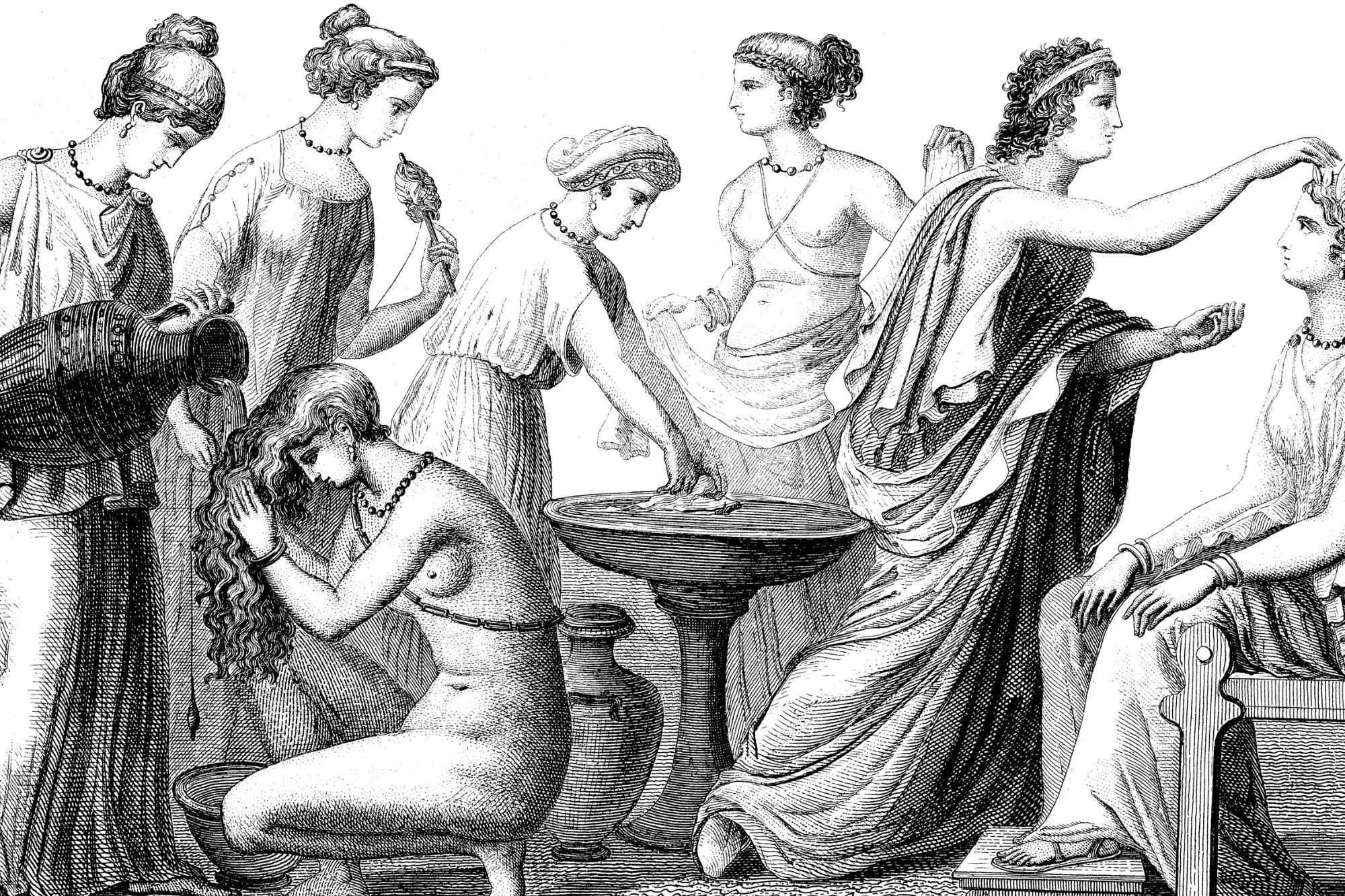
Ancient Greek medicine is often imagined as a field dominated by abstract theory and limited anatomical knowledge, especially when it comes to women’s health. The female body is assumed to have been misunderstood, medicalized through superstition, or treated as a deviation from the male norm. While these assumptions contain elements of truth, they obscure a more complex reality. By the second century CE, Greek medicine had produced a sophisticated body of writing on obstetrics, gynecology, and neonatal care. At the center of this tradition stands Soranus of Ephesus.
Soranus is not a marginal figure. His work represents the most systematic and clinically attentive treatment of women’s health to survive from antiquity. Reading him closely reveals a medical approach that is cautious, empirical, and often strikingly humane. It also shows how Greek medicine, at its best, could move beyond cultural prejudice toward practical care.
Soranus and the Medical Context
Soranus lived and worked in the early Roman Empire, probably in Rome, but he wrote in Greek and belonged to the Methodic school of medicine. This school emphasized clear observation, general bodily states, and practical treatment rather than speculative physiology. Unlike earlier medical writers who debated the hidden causes of disease, Methodic physicians focused on what could be reliably identified and treated.
This orientation shaped Soranus’ approach to women’s health. His surviving work, Gynecology, is organized systematically. It addresses anatomy, menstruation, conception, pregnancy, childbirth, postpartum care, and the health of newborns. The text is technical, but its purpose is unmistakably practical. It is written for physicians and midwives who are expected to apply its guidance in real clinical settings.
Soranus does not present himself as an innovator inventing a new discipline. He situates his work within a tradition, citing earlier authorities and correcting them when necessary. What distinguishes him is not theoretical originality, but clarity, restraint, and attention to patient well-being.
A Rejection of Extreme Theories
One of the most striking features of Soranus’ work is his rejection of popular but harmful medical theories. Earlier Greek medicine often treated the female body as inherently unstable or pathological. Concepts such as the wandering womb, excessive female moisture, or the necessity of frequent intercourse for health appear in many texts.
Soranus explicitly criticizes these ideas. He denies that the womb moves around the body causing disease. He questions the assumption that sexual activity is medically necessary for women. He argues that menstruation is a natural process, not a cleansing of harmful excess.
These positions are not merely theoretical. They have direct clinical consequences. By rejecting the wandering womb theory, Soranus avoids treatments that involve fumigation, sexual stimulation, or coercive practices. His medicine becomes less invasive and more respectful of bodily autonomy, at least by ancient standards.
Obstetrics and the Management of Childbirth
Soranus’ treatment of childbirth is especially detailed. He describes the ideal conditions for delivery, including room temperature, lighting, and the emotional state of the mother. He emphasizes the importance of skilled midwives, proper positioning, and careful monitoring of labor.
The birthing chair, the role of assistants, and the handling of complications are all discussed with precision. Soranus distinguishes between normal and difficult labor and provides step-by-step guidance for interventions when necessary. He stresses gentleness and patience rather than force.
What is most notable is his awareness of risk. Soranus recognizes that childbirth is dangerous and unpredictable. His goal is not to impose control but to minimize harm. This leads him to advise against unnecessary interference and to warn against heroic but dangerous techniques.
Gynecology as Preventive Care
Soranus’ gynecology is not limited to pregnancy and childbirth. He devotes substantial attention to menstrual disorders, fertility, contraception, and general female health. He discusses lifestyle factors such as diet, exercise, bathing, and emotional balance.
Preventive care plays a central role. Soranus believes that many gynecological problems can be avoided through moderation and attentiveness. He discourages extreme regimens and emphasizes individualized treatment based on age, constitution, and circumstances.
His discussion of contraception is particularly revealing. Soranus describes methods intended to prevent conception and treats them as legitimate medical concerns. This does not reflect modern attitudes, but it does show that ancient medicine acknowledged reproductive choice as a topic of clinical relevance.
Neonatal Care and the Value of the Newborn
Perhaps the most unexpected aspect of Soranus’ work is his detailed treatment of newborn care. He describes how to assess a newborn’s health, including signs of vitality, strength, and developmental potential. He offers guidance on cutting the umbilical cord, bathing, swaddling, feeding, and early nurturing.
Soranus emphasizes careful handling and observation. He warns against harsh practices and stresses the importance of warmth, cleanliness, and regular feeding. The newborn is treated as a patient with specific needs, not merely as an extension of the mother.
This attention reflects a broader ethical stance. While ancient societies did not universally value all infants equally, Soranus’ medical perspective treats neonatal care as a serious responsibility. Medicine extends its concern to the very beginning of life.
Limits and Tensions
It would be misleading to portray Soranus as a modern feminist or to ignore the constraints of his world. His writing assumes male physicians and reflects elite social norms. He accepts practices such as infant exposure as social facts, even if he does not endorse them.
Women’s voices are largely absent from the text. Female experience is mediated through medical observation rather than testimony. The authority remains firmly with the practitioner.
Yet within these limits, Soranus’ work represents a significant achievement. It shows that ancient medicine could develop specialized, evidence-based approaches to women’s health that avoided some of the most harmful assumptions of the past.
Why Soranus Still Matters
Soranus matters not because his treatments can be applied today, but because his method exemplifies a humane medical attitude. He prioritizes observation over theory, caution over bravado, and patient well-being over doctrinal consistency.
His work challenges the assumption that ancient medicine was uniformly crude or oppressive. It reminds us that medical progress is not linear and that care, restraint, and attentiveness have long histories.
For historians of medicine, Soranus provides a crucial reference point. For modern readers, he offers a reminder that good medicine begins with listening to the body and respecting its complexity.
How Women’s Health Was Treated in Ancient Greece
Women’s health in ancient Greek medicine was not monolithic, and it was not uniformly misguided. In the work of Soranus of Ephesus, we find a mature and careful approach to gynecology, obstetrics, and neonatal care.
Soranus transforms women’s health from a collection of myths and anxieties into a structured field of medical practice. He treats childbirth as a clinical process, gynecology as preventive care, and newborns as patients deserving attention.
His achievement lies not in anticipating modern science, but in showing how far ancient medicine could go when guided by observation, judgment, and respect.