

The Homeric Tradition Collection
€310.00
“Sing, O goddess, the rage of Achilles, son of Peleus.” – Homer, Iliad
| Weight | 6 kg |
|---|
This collection brings together the complete Homeric epics alongside the most important ancient texts that interpret, continue, and respond to Homer’s poetry.
From the Iliad and the Odyssey themselves to later epic continuations, hymns, and philosophical commentaries, the collection traces how Homer became the foundation of Greek literary, educational, and philosophical culture.
Why was Homer so influential in ancient Greek education and culture?
Homer was not only the first poet of the Greeks, but also their primary teacher. His verses shaped ideas of heroism, fate, justice, the gods, and the human condition. For centuries, poets, philosophers, and scholars read Homer as both literature and wisdom, returning to his epics to interpret their meaning, defend them, criticize them, and continue their stories.
Alongside the complete Iliad and Odyssey, the collection includes key works of the Epic Cycle, the Homeric Hymns, and major post-Homeric epics, as well as philosophical and allegorical interpretations by thinkers such as Heraclitus, Porphyry, and Plutarch. Nine major tragic works inspired by the Homeric tradition are also part of the collection.
Each volume presents the original Ancient Greek text, a reliable modern Greek translation and introductions and scholarly commentary, illuminating literary, mythological, and philosophical contexts.
What does the collection include?
The collection is ideal for students, researchers, educators, and devoted readers of epic poetry, as well as for private libraries seeking a complete and coherent presentation of the Homeric world and its reception in antiquity.
The Authors & Volumes Included are:
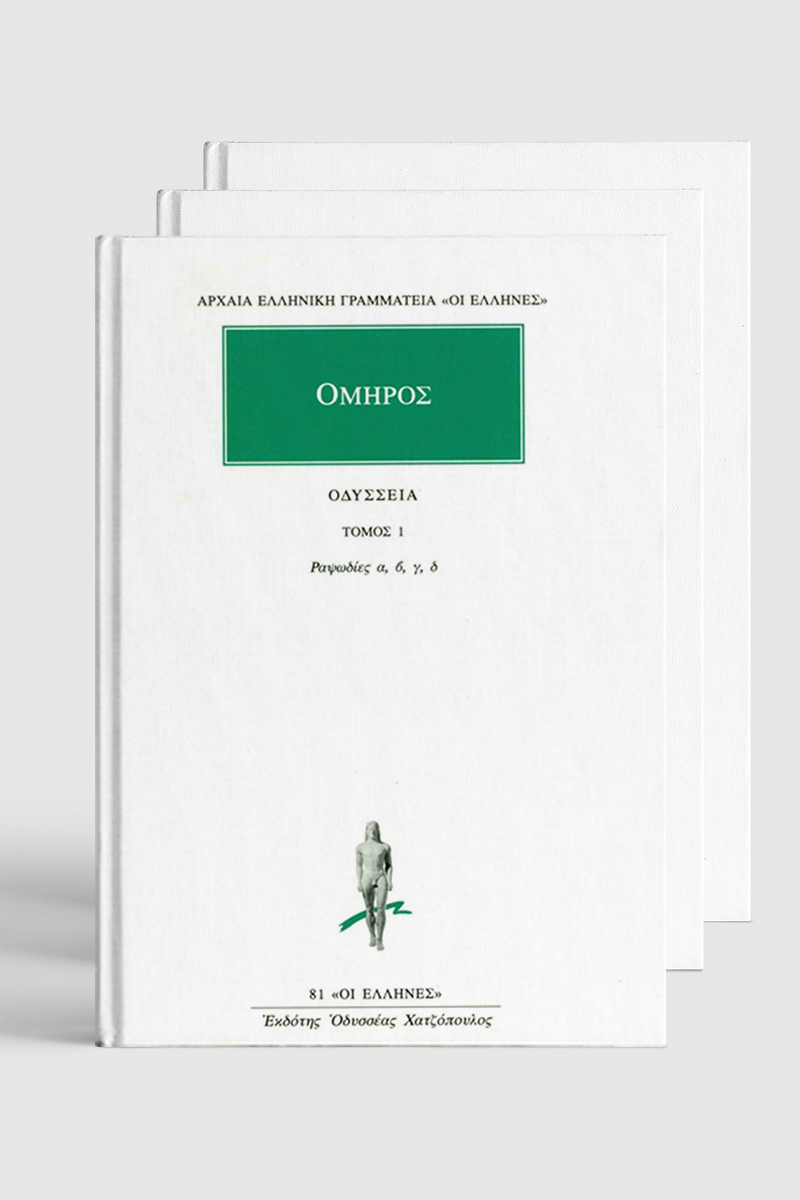
- Homer – Odyssey, 6 volumes
- Homer – Iliad, 6 volumes
- Heraclitus – Homeric Problems, 1 volume
- Quintus Smyrnaeus – Posthomerica (After Homer), 3 volumes
- Homeric Epics – Epic Cycle (Batrachomyomachia, Titanomachy, Oedipodea, etc.), 1 volume
- Homeric Hymns, 1 volume
- Porphyry – On the Cave of the Nymphs in the Odyssey & To Marcella, 1 volume
- Plutarch – Moralia 31: On Homer (On His Life and Poetry), 1 volume
Euripides: Hecuba, Trojan Women, Andromaque, Iphigenia in Aulis, Iphigenia among the Taurians, Helen, 6 volumes
Sophocles: Philoctetes, Ajax, 2 volumes
Aeschylus: Agamemnon, 1 volume.
From our Journal
How Ancient Greek Literature Survived Against All Odds
Women’s Health in Ancient Greek Medicine: Soranus and Gynecology
Why Reading Ancient Mathematics in Greek Still Matters
On the Soul: Ancient Greek Reflections on the Inner Life
Alexander the Great Through Greek Eyes
From Nature to the Human World: Presocratics and the Rise of the Sophists
Aristotle’s View of Nature: Order, Change, and Purpose
From Fate to Psychology: How Euripides Changed Tragedy
It is a 29-volume collection that includes the complete Iliad and Odyssey along with major ancient texts that interpret, continue, and respond to Homer’s poetry across centuries.
The collection includes key texts from the Epic Cycle, the Homeric Hymns, major post-Homeric epics, and philosophical or allegorical interpretations by figures such as Heraclitus, Porphyry, and Plutarch. It also includes 9 major tragedies inspired by the Homeric tradition.
Homer was seen as the Greeks’ first poet and main teacher, shaping ideas about heroism, fate, justice, the gods, and human life, and inspiring generations of poets, philosophers, and scholars.
Because Homer’s stories continue to shape how we understand human struggle, moral choice, leadership, and identity, while the tradition around him shows how great literature stays alive through interpretation and renewal.